How Commercial Fire Alarm Systems Protect Lives and Property Through Early Fire Detection

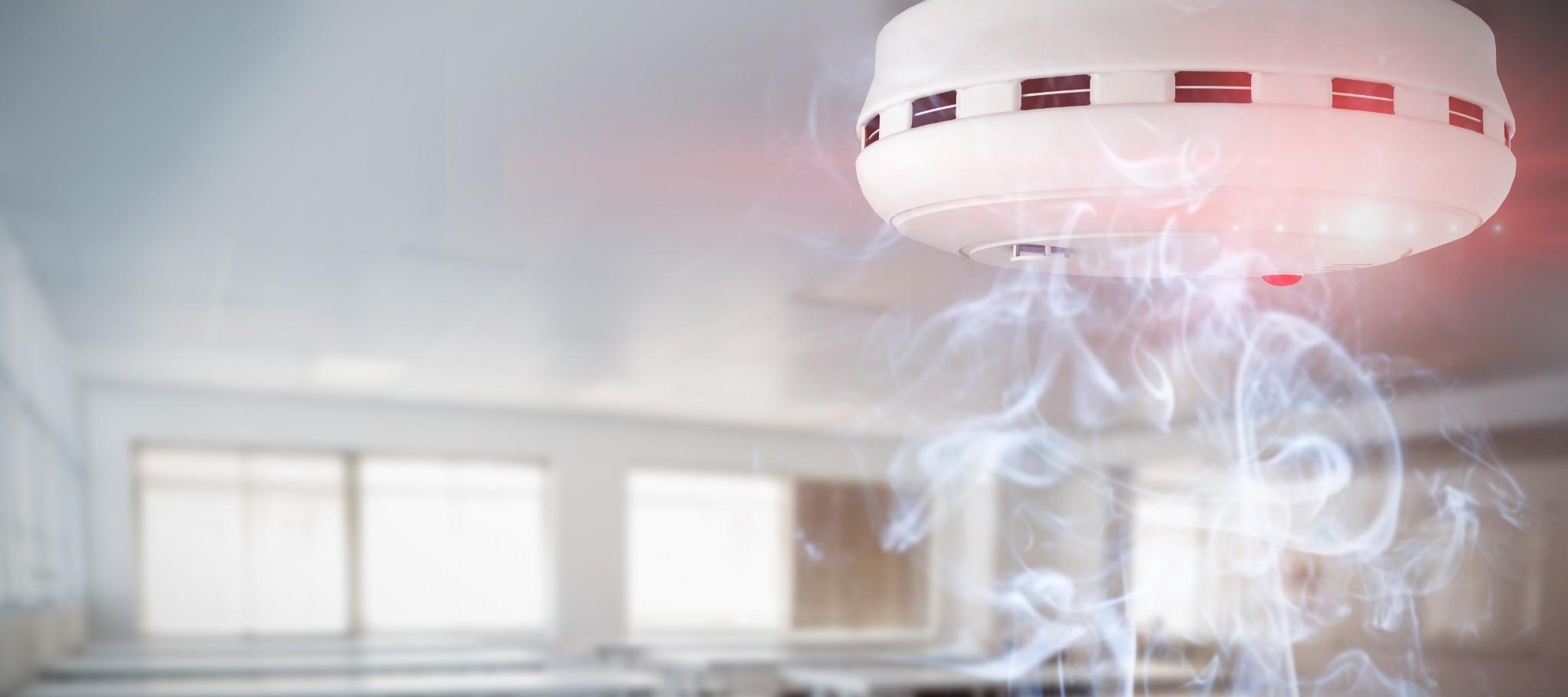
When a fire starts in a commercial building, every second counts. A small, manageable fire can quickly grow into a life-threatening emergency, producing heat, smoke, and toxic gases long before flames spread throughout the facility. Early detection is often the difference between a minor incident and a catastrophic loss.

Commercial fire alarm systems are designed to detect fires in their earliest stages, alert building occupants, activate other life safety systems, and notify emergency responders. These critical seconds allow people to evacuate safely while giving firefighters the opportunity to respond before a fire causes significant damage.

Whether you manage an office building, warehouse, manufacturing facility, healthcare campus, school, retail center, or hotel, a professionally designed fire alarm system is one of the most important investments you can make to protect your people, property, and business operations.

Why Every Second Matters During a Fire

Many commercial fires begin unnoticed. An overheated electrical panel, malfunctioning equipment, or a smoldering material can generate smoke long before anyone sees visible flames.

Without an early warning system, occupants may not realize a fire has started until evacuation becomes far more difficult.

Early fire detection helps:

• Alert occupants immediately
• Initiate emergency evacuation
• Notify emergency responders
• Reduce fire growth
• Minimize smoke damage
• Protect valuable assets
• Reduce business interruption
• Improve overall life safety

The sooner a fire is detected, the greater the opportunity to control it before it spreads throughout the building.

How Commercial Fire Alarm Systems Work

Commercial fire alarm systems continuously monitor a building using a network of intelligent detection devices connected to a central fire alarm control panel.

When smoke, heat, or another fire condition is detected, the system immediately begins a coordinated emergency response.

Depending on the building’s design, a fire alarm system may:

• Activate audible alarms
• Trigger visual notification devices
• Broadcast voice evacuation instructions
• Notify a 24/7 monitoring center
• Alert the local fire department
• Monitor fire sprinkler activation
• Release fire doors
• Recall elevators
• Activate smoke control systems
• Unlock designated exit doors

Rather than functioning as a simple alarm, modern fire alarm systems serve as the command center for a building’s life safety systems.

The Importance of Early Detection

The primary purpose of a commercial fire alarm system is to detect developing fire conditions before they become uncontrollable.

Early detection provides valuable time for:

• Safe occupant evacuation
• Emergency response
• Fire suppression
• Property protection
• Business continuity planning

In many situations, these additional minutes can dramatically reduce injuries, property damage, and operational downtime.

Fire Alarm Systems and Fire Sprinklers Work Together

Fire alarms and fire sprinkler systems perform different—but complementary—functions.

Fire alarm systems:

• Detect fire conditions
• Notify occupants
• Coordinate emergency response
• Activate life safety systems

Fire sprinkler systems:

• Control or suppress the fire
• Reduce heat release
• Slow fire spread
• Minimize property damage

Together, these systems create multiple layers of protection that significantly improve building safety.

The Role of Fire Alarm Monitoring

Detection alone is not enough if no one receives the alarm signal.

Professional fire alarm monitoring ensures alarm signals are transmitted immediately to a UL-listed monitoring center where trained operators can notify emergency responders.

Benefits of monitoring include:

• Around-the-clock protection
• Faster emergency notification
• Protection during nights and weekends
• Reduced dependence on on-site personnel
• Greater peace of mind for building owners

Monitoring is particularly valuable for facilities that operate after hours or have limited occupancy during evenings and weekends.

Modern Fire Alarm Systems Do More Than Sound an Alarm

Today’s commercial fire alarm systems are far more advanced than older systems.

Depending on the facility, they may integrate with:

• Fire sprinkler systems
• Fire pumps
• Smoke control systems
• Building automation systems
• Security systems
• Access control
• Emergency communication systems
• Elevator controls
• Emergency lighting

This integration allows multiple building systems to respond simultaneously during an emergency.

Choosing the Right Detection Devices

Commercial buildings often require multiple types of initiating devices based on occupancy and hazards.

Common detection devices include:

Smoke Detectors

Designed to identify smoke particles during the earliest stages of a fire.

Heat Detectors

Ideal for environments where dust, steam, or humidity could cause nuisance smoke alarms.

Beam Detectors

Protect large open spaces such as warehouses, atriums, gymnasiums, and manufacturing facilities.

Aspirating Smoke Detection

Provides extremely early warning in mission-critical environments including:

• Data centers
• Telecommunications facilities
• Museums
• Archives
• Clean rooms

Selecting the proper detection technology helps maximize reliability while reducing false alarms.

Industries That Depend on Fire Alarm Systems

Nearly every commercial occupancy relies on fire alarm systems.

Common industries include:

• Healthcare
• Education
• Manufacturing
• Warehousing
• Property Management
• Hospitality
• Retail
• Industrial Facilities
• Government Buildings
• Data Centers

Each occupancy has unique fire protection requirements that influence system design and inspection schedules.

Routine Inspections Help Ensure Reliable Performance

Like any life safety system, commercial fire alarm systems require routine inspection, testing, and maintenance.

Preventive maintenance helps verify:

• Detector operation
• Notification appliance performance
• Battery backup
• Communication reliability
• Fire alarm control panel functionality
• Monitoring connections
• Device sensitivity
• System documentation

Routine inspections also help identify aging equipment and potential issues before they become system failures.

Understanding NFPA Requirements

Commercial fire alarm systems are designed, installed, and maintained in accordance with nationally recognized standards.

Frequently referenced codes include:

• NFPA 72 – National Fire Alarm and Signaling Code
• NFPA 70 – National Electrical Code
• NFPA 101 – Life Safety Code

Local Authorities Having Jurisdiction (AHJs) may also establish additional requirements based on occupancy, building size, and local ordinances.

Common Fire Alarm Misconceptions

Several myths continue to create confusion about commercial fire alarm systems.

Myth: Fire alarms only alert building occupants.

Reality: Modern systems may also activate building systems, notify monitoring centers, and communicate with emergency responders.

Myth: Fire alarms eliminate the need for sprinkler systems.

Reality: Fire alarms detect the emergency, while sprinkler systems help control or suppress the fire.

Myth: Fire alarm systems require very little maintenance.

Reality: Routine inspections and testing are required to ensure reliable operation and ongoing code compliance.

Planning for Future Growth

As facilities expand or change occupancy, fire alarm systems should be evaluated to ensure they continue meeting operational and code requirements.

Building modifications that often require system updates include:

• Tenant improvements
• Building additions
• Warehouse expansions
• Office renovations
• Manufacturing process changes
• Occupancy reclassifications

Planning for future growth during system design can simplify future upgrades and reduce long-term costs.

Protect Your Facility with a Professionally Designed Fire Alarm System

Commercial fire alarm systems provide the early warning necessary to protect occupants, reduce property damage, and support faster emergency response. Combined with fire sprinkler systems, monitoring, and routine inspections, they form the foundation of a comprehensive commercial fire protection strategy.

Whether you’re constructing a new building, modernizing an aging fire alarm system, or expanding your facility, we provide complete fire alarm engineering, design, installation, inspections, testing, monitoring, maintenance, and repair services. Our experienced team works closely with building owners, facility managers, contractors, and engineers to deliver reliable fire alarm solutions that help keep your business safe, compliant, and prepared for the unexpected.
Commercial Fire Sprinkler Installation: What to Expect from Start to Finish

Installing a commercial fire sprinkler system is one of the most important investments you can make to protect your facility, employees, customers, and business operations. Whether you’re constructing a new building, expanding an existing facility, or renovating tenant space, a properly designed and installed fire sprinkler system provides reliable, automatic fire protection that can significantly reduce property damage and improve life safety.

However, many building owners and project managers are unfamiliar with the fire sprinkler installation process. Understanding what happens during each phase of a project helps improve communication, minimize delays, and ensure your new system meets all applicable fire codes and performance requirements.

This guide walks through the commercial fire sprinkler installation process from the initial evaluation through final acceptance testing and ongoing maintenance.

Every Project Begins with a Fire Protection Evaluation

No two buildings are exactly alike. Before a sprinkler system can be designed, fire protection professionals evaluate the building and its intended use to determine the appropriate level of protection.

During the initial planning phase, several factors are reviewed, including:

• Building occupancy
• Construction type
• Square footage
• Ceiling heights
• Fire hazards
• Storage arrangements
• Water supply
• Local building codes
• Insurance requirements
• Future expansion plans

Understanding these factors early helps ensure the system is properly designed for both current operations and future needs.

Fire Protection System Design

Once the building evaluation is complete, the engineering and design phase begins.

Fire protection designers develop a system that complies with applicable building codes while meeting the operational needs of the facility.

Design activities often include:

• Hydraulic calculations
• Sprinkler layout
• Pipe sizing
• Water supply analysis
• Fire pump evaluation
• Hazard classification
• Occupancy analysis
• Equipment selection

Every design is prepared to satisfy applicable NFPA standards as well as local Authority Having Jurisdiction (AHJ) requirements.

Building Information Modeling (BIM) and CAD Coordination

Many commercial construction projects utilize Building Information Modeling (BIM) and advanced CAD software to coordinate building systems before construction begins.

This process allows fire sprinkler systems to be coordinated with:

• Structural components
• HVAC systems
• Electrical systems
• Plumbing
• Lighting
• Architectural features

Early coordination helps reduce field conflicts, improve installation efficiency, and minimize costly project delays.

Permitting and Plan Review

Before installation begins, fire protection plans typically require review and approval by the local Authority Having Jurisdiction.

Depending on the project, this may include:

• Building departments
• Fire marshals
• Municipal agencies
• Insurance representatives

Permitting helps ensure the system complies with all applicable codes before installation begins.

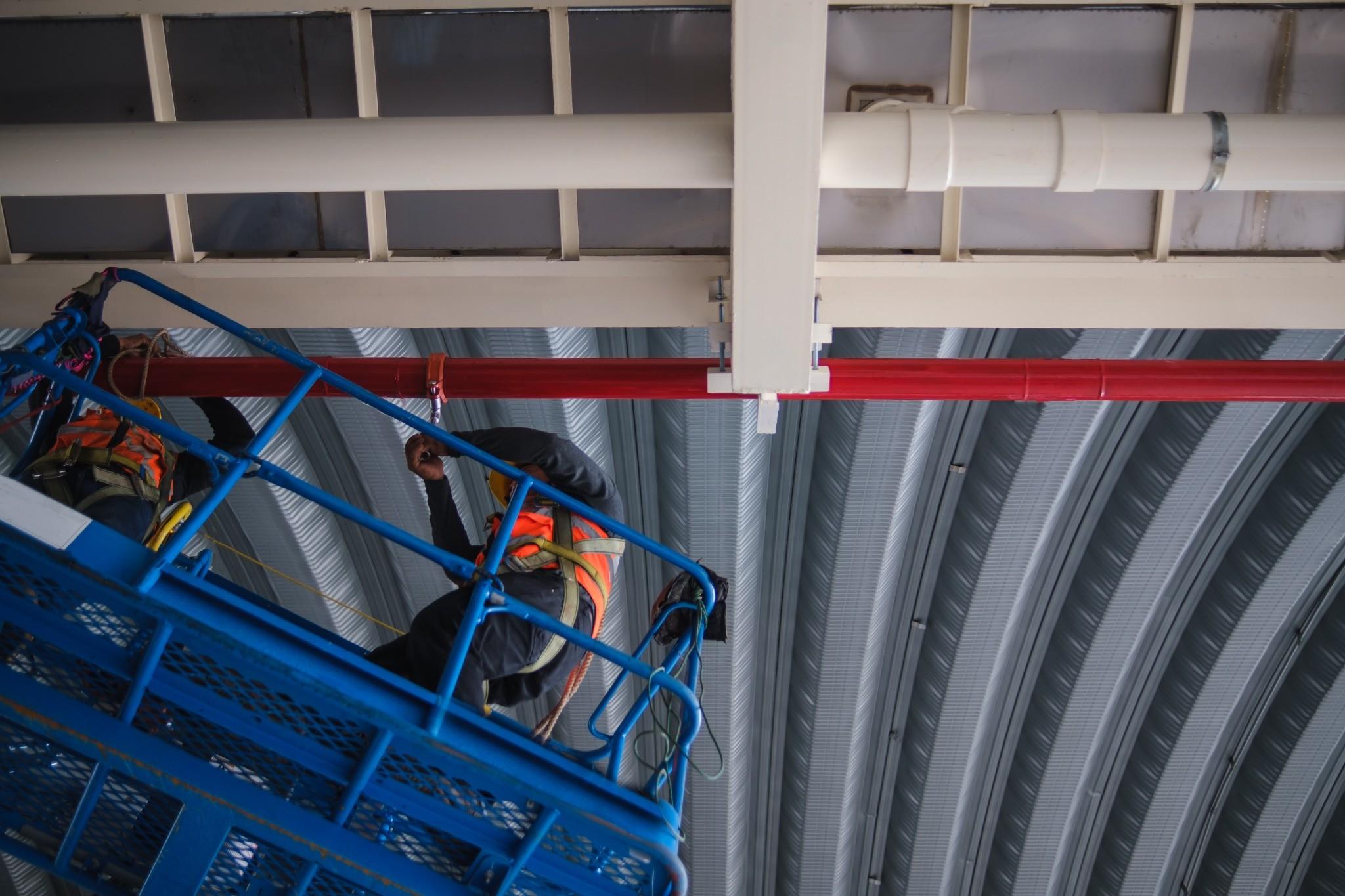
Installing the Fire Sprinkler System

After permits have been approved, installation begins.

The installation process generally includes:

• Installing underground fire service piping
• Installing overhead sprinkler piping
• Mounting sprinkler heads
• Installing valves
• Connecting alarm devices
• Installing seismic bracing where required
• Connecting fire department connections
• Installing fire pumps (when required)

Experienced sprinkler fitters work closely with other trades to maintain project schedules while ensuring code-compliant installation.

Choosing the Right Fire Sprinkler System

Several different sprinkler system types are available depending on the building and occupancy.

Wet Pipe Fire Sprinkler Systems

The most common system for commercial buildings where freezing temperatures are not a concern.

Dry Pipe Fire Sprinkler Systems

Ideal for unheated areas such as loading docks, parking garages, and cold environments.

Pre-Action Fire Sprinkler Systems

Designed for facilities where accidental water discharge could damage valuable equipment.

Deluge Fire Sprinkler Systems

Used in high-hazard industrial occupancies where rapid fire spread is possible.

ESFR Fire Sprinkler Systems

Engineered specifically for warehouses with high-piled storage.

In-Rack Fire Sprinkler Systems

Installed directly within storage racks for enhanced commodity protection.

Quell Fire Sprinkler Systems

Designed to protect challenging warehouse storage applications and cold storage facilities.

Selecting the appropriate system is one of the most important decisions made during the design process.

Hydraulic Calculations Ensure Proper Performance

One of the most critical design steps is performing hydraulic calculations.

These calculations verify that sufficient water pressure and flow are available to operate the sprinkler system as designed.

Hydraulic calculations evaluate:

• Water supply
• Pipe sizing
• Friction loss
• Elevation changes
• Sprinkler demand
• Fire pump requirements

Proper calculations help ensure the system performs effectively during a fire emergency.

Inspection During Installation

Quality control begins long before the project is complete.

Throughout installation, technicians inspect workmanship to verify:

• Proper pipe installation
• Correct sprinkler spacing
• Secure hangers and supports
• Valve installation
• Equipment accessibility
• Proper labeling

Identifying issues during construction helps reduce corrections later in the project.

Acceptance Testing

Once installation is complete, the system undergoes comprehensive acceptance testing.

Testing typically includes:

• Hydrostatic testing
• Main drain testing
• Alarm testing
• Waterflow testing
• Fire pump testing (when applicable)
• Valve inspections
• System flushing
• Final operational testing

These tests verify the sprinkler system performs according to design before the building is occupied.

Training and Documentation

Before the project is complete, building owners and facility managers should receive documentation and operational guidance.

Typical closeout documentation includes:

• As-built drawings
• Hydraulic calculations
• Product data
• Inspection reports
• Operation manuals
• Maintenance recommendations

Understanding how the system operates helps building personnel maintain reliable long-term performance.

Installation Is Only the Beginning

After installation, sprinkler systems require routine inspection, testing, and maintenance throughout their service life.

NFPA 25 establishes the inspection requirements for water-based fire protection systems.

Routine maintenance may include:

• Monthly inspections
• Quarterly inspections
• Annual inspections
• Main drain testing
• Waterflow testing
• Five-year obstruction investigations
• Internal pipe inspections
• Valve inspections

Preventive maintenance helps ensure the system remains compliant while reducing unexpected repairs.

Common Installation Challenges

Every construction project presents unique challenges.

Common issues include:

• Limited ceiling space
• Utility conflicts
• Existing building renovations
• Water supply limitations
• Schedule coordination
• Occupancy changes
• Tenant improvements

Working with an experienced fire protection contractor helps identify and resolve these challenges before they impact the project schedule.

Partner with an Experienced Fire Protection Team

Commercial fire sprinkler installation is much more than installing pipe and sprinkler heads. It requires engineering expertise, code knowledge, careful coordination, and experienced technicians who understand how to design systems that perform reliably for decades.

Whether you’re planning new construction, renovating an existing building, expanding warehouse storage, or upgrading aging fire protection equipment, we provide complete engineering, design, installation, inspections, testing, maintenance, and emergency service for commercial fire sprinkler systems. Our experienced team works closely with owners, architects, engineers, contractors, and facility managers to deliver code-compliant fire protection solutions that help safeguard people, property, and business operations.

Commercial Fire Sprinkler Systems: The Complete Guide to Protecting Your Facility

Fire sprinkler systems are one of the most effective life safety technologies ever developed. For more than a century, automatic fire sprinkler systems have protected commercial buildings by controlling or extinguishing fires before they have an opportunity to spread. Today, they remain the foundation of commercial fire protection for offices, warehouses, manufacturing facilities, healthcare campuses, schools, retail centers, hotels, and countless other occupancies.

Despite their proven effectiveness, fire sprinkler systems are often misunderstood. Many people believe every sprinkler head activates during a fire or assume sprinklers are only required in large buildings. In reality, modern sprinkler systems are highly engineered fire protection solutions designed to respond quickly, minimize property damage, and save lives.

This guide explains how commercial fire sprinkler systems work, the different system types available, where they are commonly installed, and why regular inspections and maintenance are essential for long-term reliability.

What Is a Commercial Fire Sprinkler System?

A commercial fire sprinkler system is an automatic fire suppression system that delivers water directly onto a fire when sufficient heat activates an individual sprinkler head.

Unlike manual firefighting efforts, sprinkler systems begin controlling a fire immediately—even before the fire department arrives. This early response helps reduce fire growth, limit smoke production, and minimize damage to both the building and its contents.

Most sprinkler systems consist of:

• Water supply
• Sprinkler piping
• Sprinkler heads
• Control valves
• Alarm devices
• Fire department connections
• Fire pumps (when required)

Together, these components create one of the most reliable fire protection systems available.

How Fire Sprinkler Systems Work

Contrary to Hollywood movies, all sprinkler heads do not activate simultaneously.

Each sprinkler head operates independently.

When temperatures near a sprinkler head reach its designed activation temperature, the heat-sensitive element breaks or releases, allowing water to flow directly onto the fire below.

Because only sprinklers exposed to sufficient heat activate, water is delivered only where it is needed, helping control the fire while minimizing unnecessary water damage.

This rapid response often suppresses the fire before it spreads beyond its point of origin.

Why Fire Sprinkler Systems Are So Effective

Fire sprinkler systems provide several important advantages over relying solely on manual firefighting.

Benefits include:

• Immediate fire suppression
• Faster fire control
• Reduced property damage
• Improved occupant safety
• Lower business interruption
• Reduced smoke damage
• Increased code compliance
• Lower long-term risk

Combined with fire alarm systems and monitoring, sprinkler systems create one of the most effective life safety strategies available for commercial facilities.

Types of Commercial Fire Sprinkler Systems

Not every commercial building requires the same sprinkler system. The appropriate system depends on occupancy, hazards, environmental conditions, and applicable codes.

Wet Pipe Fire Sprinkler Systems

Wet pipe systems are the most common commercial fire sprinkler system. Their piping remains filled with water at all times, providing the fastest response during a fire.

Common applications include:

• Office buildings
• Schools
• Healthcare facilities
• Hotels
• Retail buildings
• Apartment complexes

Dry Pipe Fire Sprinkler Systems

Dry pipe systems use pressurized air or nitrogen inside the piping until sprinkler activation allows water to enter the system.

They are commonly installed in:

• Parking garages
• Loading docks
• Unheated warehouses
• Cold climates
• Exterior canopies

Pre-Action Fire Sprinkler Systems

Pre-action systems combine fire detection with sprinkler protection to reduce the risk of accidental water discharge.

Typical applications include:

• Data centers
• Telecommunications facilities
• Museums
• Libraries
• Archives
• Mission-critical facilities

Deluge Fire Sprinkler Systems

Deluge systems are designed for high-hazard occupancies where rapidly spreading fires are possible.

Common applications include:

• Chemical processing plants
• Aircraft hangars
• Fuel storage facilities
• Industrial processing
• Power generation

ESFR Fire Sprinkler Systems

Early Suppression Fast Response (ESFR) systems are engineered specifically for warehouses with high-piled storage.

Their high-flow sprinkler heads suppress fires rapidly while reducing the need for in-rack sprinklers in many applications.

In-Rack Fire Sprinkler Systems

In-rack sprinkler systems provide protection directly within storage racks to improve fire control for high-density storage applications.

Quell Fire Sprinkler Systems

Quell systems are specialized sprinkler technologies designed to protect warehouses storing cartoned expanded plastics and other high-challenge commodities, including cold storage applications.

How Fire Sprinklers Work with Other Fire Protection Systems

Fire sprinkler systems are most effective when integrated with other life safety systems.

A comprehensive fire protection strategy may include:

• Fire Alarm Systems
• Fire Alarm Monitoring
• Fire Pumps
• Fire Extinguishers
• Special Hazard Fire Suppression
• Backflow Preventers
• Emergency & Exit Lighting
• Security & Access Control

Each system serves a unique purpose while working together to improve emergency response and occupant safety.

Industries That Depend on Fire Sprinkler Systems

Nearly every commercial industry relies on automatic fire sprinkler systems.

Common occupancies include:

• Manufacturing
• Warehousing & Distribution
• Healthcare
• Property Management
• Retail
• Hospitality
• Education
• Government
• Industrial Facilities
• Data Centers

Each industry presents unique fire hazards that influence sprinkler system design and inspection requirements.

Fire Sprinkler Inspections Are Critical

Installing a sprinkler system is only the first step. Like any mechanical system, sprinklers require ongoing inspection, testing, and maintenance to ensure reliable performance.

Routine inspections help identify:

• Damaged sprinkler heads
• Corrosion
• Obstructed piping
• Closed control valves
• Water supply issues
• Alarm deficiencies
• Mechanical damage
• System impairments

Regular inspections reduce the likelihood of unexpected failures while helping facilities remain compliant with applicable codes.

NFPA 25 Inspection Requirements

NFPA 25 establishes the inspection, testing, and maintenance requirements for water-based fire protection systems.

Routine services may include:

• Visual inspections
• Main drain testing
• Waterflow testing
• Valve inspections
• Fire pump testing
• Five-year obstruction investigations
• Internal pipe inspections
• Check valve inspections

Maintaining these inspection schedules helps ensure sprinkler systems remain operational throughout their service life.

Common Fire Sprinkler Myths

Several misconceptions continue to surround automatic sprinkler systems.

Myth: Every sprinkler head activates during a fire.

Reality: Only sprinkler heads exposed to sufficient heat activate.

Myth: Sprinklers cause more damage than fire.

Reality: Early sprinkler activation typically limits fire growth and significantly reduces overall property damage.

Myth: Fire sprinklers activate because of smoke.

Reality: Sprinklers respond to heat—not smoke.

Understanding how sprinkler systems actually work helps facility owners appreciate their effectiveness and reliability.

Planning for Future Growth

As commercial facilities expand or change occupancy, fire protection requirements often change as well.

Examples include:

• Warehouse expansions
• Tenant improvements
• Production line modifications
• Storage reconfigurations
• Building additions
• Equipment upgrades

Reviewing your sprinkler system whenever major building changes occur helps ensure continued code compliance and adequate fire protection.

Protect Your Facility with a Reliable Fire Sprinkler System

Commercial fire sprinkler systems remain one of the most effective ways to protect people, property, and business operations from fire. Whether you’re constructing a new building, renovating an existing facility, or upgrading aging equipment, selecting the right sprinkler system is essential to maintaining a safe and code-compliant environment.

From engineering and design to installation, inspections, testing, maintenance, repairs, and emergency service, we provide complete fire sprinkler solutions for commercial facilities across virtually every industry. Our experienced team can help you develop a fire protection strategy that protects your facility today while supporting your long-term operational goals.

Commercial Fire Protection Systems: How They Work Together to Protect Your Facility

Most commercial buildings rely on more than a single fire protection system to protect occupants and property. Instead, they utilize multiple interconnected systems designed to detect, control, suppress, and communicate during a fire emergency. When these systems work together, they create multiple layers of protection that improve life safety, reduce property damage, and help businesses recover more quickly after an incident.

Unfortunately, many building owners think of fire protection as a single sprinkler system or fire alarm. In reality, today’s commercial fire protection strategies involve a coordinated network of specialized systems, each serving a unique purpose. Understanding how these systems work together can help facility managers make better decisions about inspections, maintenance, future upgrades, and long-term compliance.

What Is a Commercial Fire Protection System?

A commercial fire protection system is any system or equipment designed to detect, control, suppress, or respond to a fire emergency within a building.

Rather than relying on one piece of equipment, most commercial facilities incorporate several integrated life safety systems that perform different functions throughout an emergency.

These systems work together to:

• Detect fire conditions
• Notify building occupants
• Alert emergency responders
• Control or extinguish the fire
• Protect critical assets
• Support safe evacuation
• Minimize property damage
• Maintain business continuity

Each layer of protection plays an important role in reducing risk.

Fire Sprinkler Systems

Fire sprinkler systems remain one of the most effective forms of commercial fire protection. Once activated by heat, they deliver water directly to the fire, helping control or extinguish it before it spreads throughout the building.

Depending on the occupancy and hazards present, facilities may utilize:

• Wet Pipe Fire Sprinkler Systems
• Dry Pipe Fire Sprinkler Systems
• Pre-Action Fire Sprinkler Systems
• Deluge Fire Sprinkler Systems
• ESFR Fire Sprinkler Systems
• In-Rack Fire Sprinkler Systems
• Quell Fire Sprinkler Systems

Each system is engineered for specific applications and environmental conditions.

Fire Alarm Systems

Fire alarm systems provide the earliest warning that a fire may be developing.

Modern commercial fire alarm systems can:

• Detect smoke or heat
• Notify occupants
• Activate horns and strobes
• Broadcast voice evacuation messages
• Interface with sprinkler systems
• Notify monitoring centers
• Initiate emergency response procedures

Without early detection, even the most advanced suppression systems may not provide occupants with enough time to evacuate safely.

Fire Alarm Monitoring

Monitoring extends the effectiveness of your fire alarm system by ensuring alarm signals receive immediate attention.

When an alarm activates, monitoring services can:

• Receive alarm signals 24 hours a day
• Notify emergency responders
• Verify alarm conditions
• Reduce response times
• Protect buildings during unoccupied hours

Monitoring provides an additional layer of protection when facility personnel may not be present.

Special Hazard Fire Suppression Systems

Some commercial occupancies require specialized suppression systems that extend beyond traditional water-based sprinklers.

Examples include:

• FM-200 Clean Agent Systems
• FE-13 Clean Agent Systems
• CO₂ Fire Suppression Systems
• Foam Fire Suppression Systems
• Water Mist Fire Suppression Systems
• Vortex Hybrid Suppression Systems
• Kitchen Hood Fire Suppression Systems

These systems protect high-value equipment, hazardous processes, and specialized occupancies where water alone may not provide the most effective solution.

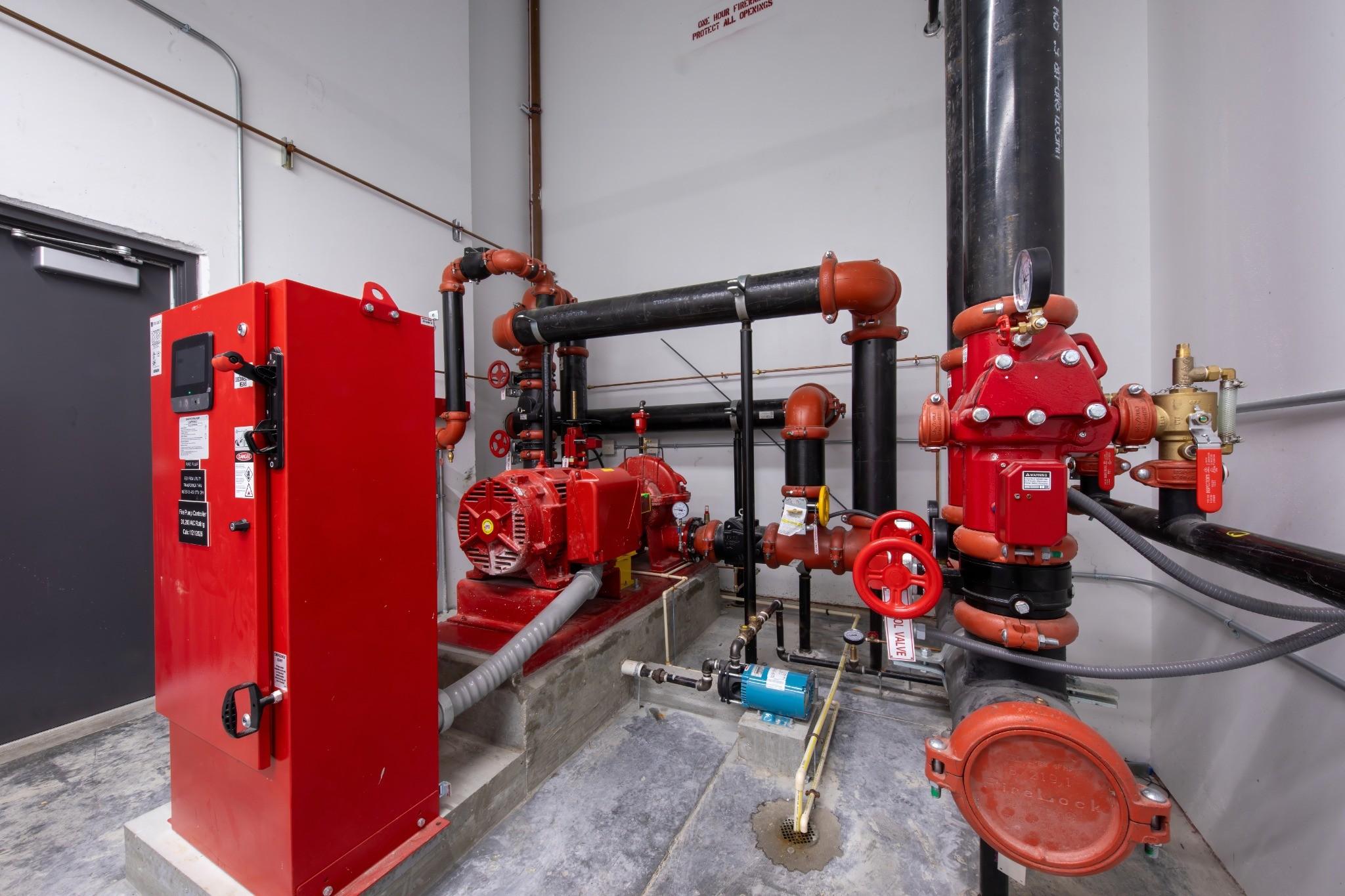
Fire Pumps

Many commercial buildings require fire pumps to provide the water pressure necessary for sprinkler systems to perform as designed.

Fire pumps are commonly installed in:

• High-rise buildings
• Large warehouses
• Industrial facilities
• Healthcare campuses
• Manufacturing plants
• Municipal water systems with limited pressure

Routine inspection and testing help verify these systems remain ready during an emergency.

Portable Fire Extinguishers

Portable fire extinguishers provide occupants with an opportunity to extinguish small fires before they grow beyond control.

Commercial facilities often require multiple extinguisher types based on the hazards present.

Examples include:

• Class A
• Class B
• Class C
• Class D
• Class K

Routine inspections and maintenance ensure extinguishers remain compliant with NFPA 10 requirements.

Backflow Preventers

Fire protection systems depend on a reliable water supply.

Backflow preventers help protect public drinking water by preventing contaminated water from flowing back into municipal water systems.

Routine testing helps ensure these devices continue operating properly while meeting local water authority requirements.

Emergency & Exit Lighting

Power outages frequently accompany fire emergencies.

Emergency lighting systems help occupants safely evacuate while exit signs clearly identify evacuation routes during low-visibility conditions.

Routine inspections verify these systems remain operational when normal building power is lost.

Security & Access Control Integration

Many modern commercial buildings integrate security systems with fire protection equipment.

During an emergency, fire alarm systems may automatically:

• Unlock designated doors
• Release magnetic locks
• Override access control systems
• Improve occupant evacuation
• Assist first responders

This integration helps improve both life safety and emergency response.

Applicable Fire Protection Standards

Commercial fire protection systems are governed by numerous nationally recognized standards.

Commonly referenced codes include:

• NFPA 13 – Installation of Sprinkler Systems
• NFPA 25 – Inspection, Testing, and Maintenance of Water-Based Fire Protection Systems
• NFPA 72 – National Fire Alarm and Signaling Code
• NFPA 10 – Portable Fire Extinguishers
• NFPA 20 – Installation of Fire Pumps
• NFPA 96 – Commercial Kitchen Fire Protection
• NFPA 2001 – Clean Agent Fire Extinguishing Systems
• NFPA 101 – Life Safety Code

Additional state, municipal, and Authority Having Jurisdiction (AHJ) requirements may also apply.

Build a Complete Fire Protection Strategy

The most effective fire protection programs are proactive rather than reactive. Instead of focusing on individual systems, successful facility managers view fire protection as a coordinated strategy that evolves alongside their building and operations.

As facilities expand, occupancy changes, production processes evolve, or equipment is upgraded, fire protection systems should also be evaluated to ensure they continue providing adequate protection.

Protect Your Facility with a Complete Fire Protection Solution

Commercial fire protection is most effective when every system works together. Fire alarms provide early detection, sprinklers suppress fires, monitoring ensures emergency response, and specialized systems protect critical assets. Combined with regular inspections, preventive maintenance, and professional service, these systems create multiple layers of protection that help safeguard people, property, and business operations.

Whether you’re designing a new facility, upgrading existing systems, or developing a long-term inspection and maintenance program, we provide comprehensive fire protection solutions tailored to your building’s unique needs. Our experienced team can help you design, install, inspect, service, and maintain every component of your fire protection system so your facility remains safe, compliant, and prepared.

Commercial Fire and Smoke Detection Systems: Why Early Detection Is Critical

When a fire starts inside a commercial building, every second matters. The sooner smoke or heat is detected, the faster occupants can evacuate, emergency responders can be notified, and fire protection systems can begin working to control the situation. Early detection is one of the most important factors in reducing injuries, minimizing property damage, and protecting business operations.

Modern commercial fire and smoke detection systems do much more than sound an alarm. They are intelligent life safety systems that detect developing fire conditions, communicate with building occupants, activate other fire protection equipment, and notify monitoring centers and emergency responders. When properly designed, installed, inspected, and maintained, these systems provide the critical first layer of protection for virtually every commercial facility.

Why Early Fire Detection Matters

Many commercial fires begin long before flames become visible. Electrical failures, overheating equipment, smoldering materials, or hidden ignition sources can generate smoke long before a fire spreads throughout a building.

Detecting these conditions early provides valuable time to:

• Alert occupants
• Begin evacuation procedures
• Notify emergency responders
• Activate integrated fire protection systems
• Reduce fire growth
• Limit smoke damage
• Minimize business interruption

The earlier a fire is detected, the greater the opportunity to control the incident before it becomes catastrophic.

How Commercial Fire Detection Systems Work

Commercial fire detection systems continuously monitor a building for signs of smoke, heat, or fire.

When an initiating device detects an abnormal condition, the system immediately communicates with the fire alarm control panel. Depending on the building and system configuration, it can then:

• Sound audible alarms
• Activate visual notification devices
• Broadcast voice evacuation messages
• Notify a monitoring center
• Dispatch emergency responders
• Monitor fire sprinkler system activity
• Release fire doors
• Recall elevators
• Control smoke management systems
• Unlock designated exits

This coordinated response helps protect occupants while reducing emergency response times.

Smoke Detectors vs. Heat Detectors

Not every area of a building requires the same type of detection device.

Smoke Detectors

Smoke detectors are designed to identify smoke particles before temperatures become extremely high. They provide the earliest possible warning and are commonly installed throughout offices, schools, healthcare facilities, hotels, retail buildings, and commercial occupancies.

Heat Detectors

Heat detectors respond to elevated temperatures rather than smoke. They are commonly installed where normal environmental conditions could cause nuisance smoke alarms.

Typical applications include:

• Commercial kitchens
• Mechanical rooms
• Manufacturing facilities
• Warehouses
• Loading docks
• Parking structures
• Industrial environments

Many commercial buildings utilize both technologies to maximize protection while reducing false alarms.

Types of Smoke Detection Technologies

Modern commercial fire alarm systems utilize several types of smoke detection depending on the occupancy and level of protection required.

Photoelectric Smoke Detectors

Photoelectric detectors are particularly effective at identifying slow, smoldering fires that produce large smoke particles before open flames develop.

Ionization Smoke Detectors

Ionization detectors respond more quickly to rapidly developing flaming fires involving combustible materials.

Beam Smoke Detection

Beam detectors use projected light beams to protect large open spaces where traditional spot detectors may not provide adequate coverage.

Common applications include:

• Warehouses
• Distribution centers
• Aircraft hangars
• Gymnasiums
• Manufacturing facilities

Aspirating Smoke Detection

Aspirating smoke detection systems continuously sample air through small piping networks and can identify extremely small amounts of smoke.

These systems are commonly installed in:

• Data centers
• Telecommunications facilities
• Museums
• Archives
• Clean rooms
• Mission-critical environments

Their exceptional sensitivity allows them to detect fire conditions before visible smoke develops.

Detection Is Only One Part of the Fire Alarm System

Fire detection devices are only one component of a complete commercial fire alarm system.

Other components often include:

• Fire alarm control panels
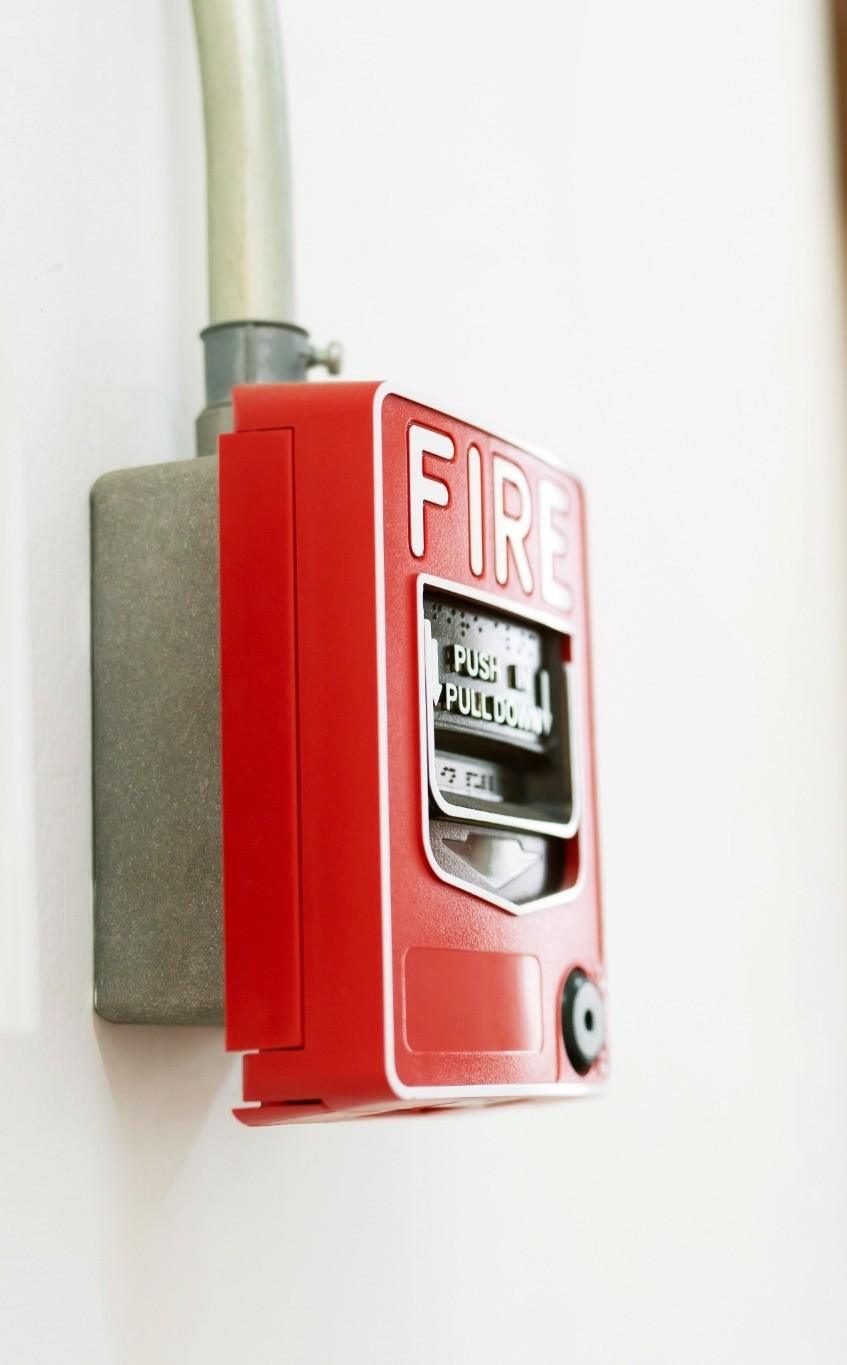
• Manual pull stations
• Horns and strobes
• Voice evacuation systems
• Remote annunciators
• Emergency communication systems
• Fire alarm monitoring
• Backup power supplies

Together, these components provide a coordinated response during an emergency.

Integration with Other Fire Protection Systems

One of the greatest advantages of modern commercial fire alarm systems is their ability to integrate with other life safety systems.

Fire detection systems may interface with:

• Fire sprinkler systems
• Fire alarm monitoring
• Fire pumps
• Smoke control systems
• Access control systems
• Security systems
• Emergency lighting
• Elevator controls
• Building automation systems

This integration creates multiple layers of protection that improve occupant safety while minimizing property loss.

Fire Alarm Monitoring Enhances Protection

Detection is only valuable if someone receives the alarm.

Professional fire alarm monitoring ensures alarm signals are transmitted immediately to a UL-listed monitoring center where trained operators can notify emergency responders.

Benefits include:

• 24/7 monitoring
• Faster emergency notification
• Protection during unoccupied hours
• Reduced dependence on building personnel
• Improved business continuity

Monitoring helps ensure that alarm signals receive immediate attention regardless of the time of day.

Commercial Buildings That Benefit from Advanced Detection

Nearly every commercial occupancy benefits from professionally designed fire detection systems.

Common applications include:

• Office buildings
• Healthcare facilities
• Manufacturing plants
• Warehouses
• Schools and universities
• Hotels
• Retail centers
• Government buildings
• Industrial facilities
• Data centers

Each occupancy requires detection devices appropriate for its specific hazards, occupancy classification, and code requirements.

Inspection and Testing Are Essential

Like all fire protection systems, smoke detection equipment requires routine inspection, testing, and maintenance.

Regular service helps verify:

• Detector sensitivity
• Proper device operation
• Battery backup performance
• Communication reliability
• Alarm notification
• Documentation compliance

Routine inspections also help identify dirty detectors, damaged devices, aging equipment, and other issues before they affect system performance.

NFPA Standards for Fire Detection Systems

Commercial fire detection systems are designed and maintained in accordance with nationally recognized standards.

Frequently referenced codes include:

• NFPA 72 – National Fire Alarm and Signaling Code
• NFPA 70 – National Electrical Code
• NFPA 101 – Life Safety Code

Additional requirements may apply depending on the occupancy type and local Authority Having Jurisdiction (AHJ).

Why Professional Design Matters

Every commercial building presents unique challenges. Occupancy type, ceiling height, airflow, equipment, storage arrangements, and operational hazards all influence detector selection and placement.

A professionally designed fire detection system helps ensure:

• Proper detector coverage
• Faster fire detection
• Reduced false alarms
• Compliance with applicable codes
• Integration with other life safety systems
• Long-term reliability

Choosing the correct detection technology from the beginning improves both safety and system performance.

Protect Your Facility with Advanced Fire Detection

Early detection is the foundation of every effective fire protection strategy. By identifying smoke or heat in the earliest stages of a fire, commercial fire detection systems help protect occupants, reduce property damage, and support faster emergency response.

Whether you’re constructing a new facility, upgrading an existing fire alarm system, or expanding your building, we provide complete fire alarm design, installation, inspections, testing, monitoring, maintenance, and repair services. Our experienced team can help you develop a fire detection solution that keeps your facility protected, compliant, and prepared for the unexpected.
Industrial Fire Prevention Best Practices for Manufacturing and Industrial Facilities

Industrial facilities face some of the most complex fire protection challenges of any commercial occupancy. Manufacturing operations, processing equipment, combustible materials, flammable liquids, high-voltage electrical systems, welding operations, and heavy machinery all contribute to an elevated fire risk that requires a comprehensive fire protection strategy.

While every facility is unique, one principle remains the same: preventing fires is far less costly than recovering from one. A well-designed fire protection program not only helps safeguard employees and assets, but also minimizes downtime, supports regulatory compliance, and protects business continuity.

Whether you manage a manufacturing plant, warehouse, processing facility, utility, or industrial campus, implementing proven fire prevention practices can significantly reduce risk while helping ensure your fire protection systems are ready to perform when they’re needed most.

Understanding Industrial Fire Risks

Unlike many commercial office buildings, industrial facilities often contain multiple ignition sources operating alongside combustible materials. These hazards increase both the likelihood of a fire and the speed at which it can spread if left uncontrolled.

Common industrial fire hazards include:

• Welding and cutting operations
• Hot work activities
• Flammable and combustible liquids
• Dust-producing manufacturing processes
• Electrical equipment
• Mechanical equipment
• Industrial ovens and furnaces
• Hydraulic fluids
• Lithium-ion battery storage
• High-piled storage
• Compressed gases

Every facility should begin with a comprehensive fire risk assessment that identifies potential ignition sources, fuel loads, and operational hazards.

Develop a Comprehensive Fire Protection Strategy

Industrial fire protection extends well beyond installing a sprinkler system. The most effective facilities implement multiple layers of protection that work together to detect, control, suppress, and monitor fire events.

A comprehensive fire protection strategy may include:

• Fire sprinkler systems
• Fire alarm systems
• Fire alarm monitoring
• Special hazard fire suppression
• Portable fire extinguishers
• Fire pumps
• Backflow preventers
• Emergency and exit lighting
• Security and access control
• Routine inspections and preventive maintenance

When these systems are properly integrated, they provide significantly greater protection than any individual system alone.

Choose the Right Fire Sprinkler System

Not every industrial facility requires the same type of sprinkler system.

Depending on your operations, one of several sprinkler system types may be appropriate.

Wet Pipe Fire Sprinkler Systems

Ideal for heated manufacturing facilities where freezing temperatures are not a concern.

Dry Pipe Fire Sprinkler Systems

Designed for unheated buildings, loading docks, parking structures, and facilities exposed to freezing conditions.

Pre-Action Fire Sprinkler Systems

Frequently used to protect sensitive manufacturing equipment, electrical rooms, and mission-critical operations where accidental water discharge must be minimized.

Deluge Fire Sprinkler Systems

Commonly installed in high-hazard industrial occupancies involving rapidly spreading fires, flammable liquids, or chemical processing.

ESFR and In-Rack Fire Sprinkler Systems

Often installed in industrial warehouses with high-piled storage to improve fire suppression performance.

Selecting the appropriate system depends on occupancy, commodities, building construction, and applicable code requirements.

Protect High-Hazard Processes

Many industrial operations involve hazards that require specialized fire suppression systems beyond traditional sprinklers.

Examples include:

• Paint booths
• Chemical processing
• Flammable liquid storage
• Turbine rooms
• Generator rooms
• Electrical substations
• Control rooms
• Server rooms
• Industrial machinery

These occupancies may require:

• Foam fire suppression systems
• CO₂ suppression systems
• FM-200 clean agent systems
• Water mist systems
• Vortex hybrid suppression systems

Protecting these high-value assets helps minimize equipment damage and production downtime.

Prioritize Preventive Maintenance

Fire protection systems require routine inspection, testing, and maintenance to remain effective.

Preventive maintenance helps identify deficiencies before they become costly failures while ensuring systems remain compliant with applicable NFPA standards.

Routine services often include:

• Fire sprinkler inspections
• Fire alarm inspections
• Fire pump testing
• Fire extinguisher inspections
• Backflow preventer testing
• Alarm monitoring verification
• Valve inspections
• Main drain testing
• Obstruction investigations

Maintaining a proactive inspection schedule helps reduce unexpected repairs while improving system reliability.

Maintain Good Housekeeping Practices

One of the simplest ways to reduce industrial fire risk is maintaining a clean and organized facility.

Good housekeeping practices include:

• Removing combustible waste regularly
• Cleaning combustible dust accumulations
• Properly storing flammable liquids
• Maintaining clear access to fire protection equipment
• Keeping electrical rooms free of storage
• Protecting sprinkler heads from damage
• Maintaining adequate clearance below sprinklers

Poor housekeeping is one of the most common contributors to preventable industrial fires.

Control Hot Work Activities

Welding, cutting, brazing, grinding, and similar operations account for many industrial fires every year.

Facilities should implement formal hot work procedures that include:

• Hot work permits
• Fire watches
• Removal of combustible materials
• Fire extinguisher availability
• Post-work monitoring
• Employee training

Following established hot work procedures significantly reduces fire risk during maintenance and construction activities.

Train Employees Regularly

Employees play an important role in preventing workplace fires.

Training should include:

• Fire hazard recognition
• Fire extinguisher use
• Emergency reporting procedures
• Evacuation routes
• Alarm response procedures
• Safe storage of hazardous materials
• Hot work safety
• Housekeeping expectations

Well-trained employees often identify hazards before they become serious incidents.

Understand Applicable Fire Codes

Industrial facilities must comply with multiple fire protection standards depending on occupancy and operations.

Frequently referenced standards include:

• NFPA 13 – Installation of Sprinkler Systems
• NFPA 25 – Inspection, Testing, and Maintenance of Water-Based Fire Protection Systems
• NFPA 72 – National Fire Alarm and Signaling Code
• NFPA 10 – Portable Fire Extinguishers
• NFPA 20 – Installation of Fire Pumps
• NFPA 30 – Flammable and Combustible Liquids Code
• NFPA 70 – National Electrical Code
• OSHA workplace safety regulations

Local Authorities Having Jurisdiction (AHJs) may also establish additional requirements.

Fire Protection Is an Ongoing Process

Industrial operations change over time. New production lines, equipment upgrades, facility expansions, storage changes, and process modifications can all affect fire protection requirements.

Regular evaluations help determine whether existing fire protection systems continue to provide adequate protection as operations evolve.

Facilities should periodically review:

• Building occupancy
• Commodity classifications
• Storage arrangements
• Production processes
• Fire protection system performance
• Inspection records
• Maintenance history

Keeping fire protection aligned with operational changes helps reduce risk while maintaining compliance.

Protect Your Facility with a Proactive Fire Protection Program

Industrial facilities represent significant investments in people, equipment, inventory, and operations. A proactive fire prevention strategy helps reduce the likelihood of fire while ensuring your fire protection systems are prepared to respond when needed.

Whether you operate a manufacturing facility, industrial plant, warehouse, or processing operation, we provide comprehensive fire protection services including engineering, design, installation, inspections, testing, maintenance, monitoring, and emergency service. Our experienced team can help you develop a customized fire protection strategy that supports your operations, protects your assets, and helps keep your facility compliant with applicable codes and standards.

Why Wet Pipe Fire Sprinkler Systems Are the Most Common Commercial Fire Protection System

When people think of commercial fire protection, they often picture a fire sprinkler system. While there are several types of fire sprinkler systems available, wet pipe fire sprinkler systems remain the most widely installed solution in commercial buildings across the United States.

Their simple design, proven reliability, lower maintenance requirements, and ability to respond quickly during a fire have made wet pipe systems the preferred choice for millions of commercial facilities. From office buildings and schools to healthcare facilities, retail centers, and apartment buildings, wet pipe sprinkler systems provide dependable protection while helping businesses meet fire code requirements and protect lives and property.

This guide explains why wet pipe systems are the industry’s most common fire protection solution, where they are used, and when another sprinkler system may be a better choice.

Why Wet Pipe Fire Sprinkler Systems Are So Popular

Wet pipe sprinkler systems are called “wet” because the piping is constantly filled with water under pressure. When heat from a fire activates an individual sprinkler head, water is immediately discharged onto the fire.

Because water is already inside the piping network, there is virtually no delay between sprinkler activation and water discharge. This rapid response helps control fires early, often before they have an opportunity to spread throughout a building.

Their straightforward design also makes wet pipe systems one of the most reliable forms of automatic fire protection available today.

How Wet Pipe Fire Sprinkler Systems Work

Despite their effectiveness, wet pipe systems operate using a surprisingly simple process.

During normal operation:

• Sprinkler piping remains filled with pressurized water.
• Individual sprinkler heads remain closed.
• Each sprinkler activates independently.
• Only sprinkler heads exposed to sufficient heat will operate.
• Water is discharged directly onto the fire.

Contrary to popular myths, all sprinkler heads do not activate at the same time. Only the sprinkler heads exposed to high temperatures will open, allowing water to flow only where it is needed.

This targeted response helps minimize both fire damage and unnecessary water damage.

Benefits of Wet Pipe Fire Sprinkler Systems

Wet pipe systems offer several advantages that make them ideal for many commercial occupancies.

Fast Response

Because water is already inside the piping, wet pipe systems provide the fastest sprinkler response of any traditional sprinkler system.

Simple Design

Fewer moving parts result in fewer maintenance concerns and increased long-term reliability.

Lower Installation Costs

Wet pipe systems are generally less complex than dry pipe or pre-action systems, often reducing installation costs.

Reduced Maintenance

Compared to more specialized sprinkler systems, wet pipe systems typically require less ongoing maintenance while remaining highly dependable.

Proven Performance

Wet pipe sprinkler systems have protected commercial buildings for decades and continue to demonstrate outstanding fire control capabilities.

Buildings That Commonly Use Wet Pipe Systems

Wet pipe sprinkler systems are appropriate for buildings where interior temperatures remain above freezing year-round.

Common applications include:

• Office Buildings
• Healthcare Facilities
• Schools and Universities
• Retail Centers
• Apartment Buildings
• Hotels
• Government Buildings
• Churches
• Mixed-Use Developments
• Commercial Facilities

These occupancies benefit from the system’s simplicity, reliability, and rapid fire suppression capabilities.

When Wet Pipe Systems May Not Be the Best Choice

Although wet pipe systems work well in many buildings, they are not appropriate for every application.

Facilities exposed to freezing temperatures require alternative fire protection solutions.

Examples include:

• Unheated warehouses
• Parking garages
• Loading docks
• Exterior canopies
• Refrigerated facilities
• Freezer storage
• Cold storage warehouses

In these environments, water-filled piping could freeze, causing significant damage and preventing the system from operating properly.

Other Fire Sprinkler Systems to Consider

Depending on your facility’s hazards and operating conditions, another sprinkler system may provide better protection.

Dry Pipe Fire Sprinkler Systems

Designed for areas exposed to freezing temperatures, dry pipe systems use pressurized air or nitrogen inside the piping until sprinkler activation allows water to enter the system.

Pre-Action Fire Sprinkler Systems

Frequently installed in data centers, museums, archives, and telecommunications facilities where accidental water discharge must be minimized.

Deluge Fire Sprinkler Systems

Designed for high-hazard industrial occupancies where rapid fire spread is possible. Deluge systems discharge water through all open sprinkler nozzles simultaneously after activation.

ESFR Fire Sprinkler Systems

Engineered specifically for modern warehouses with high-piled storage. ESFR systems suppress fires quickly while reducing the need for in-rack sprinklers in many applications.

In-Rack Fire Sprinkler Systems

Installed directly within storage racks to improve fire control in warehouses storing high-challenge commodities.

Quell Fire Sprinkler Systems

Specialized sprinkler technology designed for cold storage facilities, distribution centers, and warehouses storing cartoned expanded plastics and other challenging commodities.

Choosing the Right Fire Protection System

Selecting the appropriate sprinkler system depends on several factors.

These include:

• Building occupancy
• Construction type
• Storage arrangements
• Fire hazards
• Environmental conditions
• Water supply
• Future expansion plans
• Applicable NFPA standards
• Local Authority Having Jurisdiction (AHJ) requirements

A fire protection professional can evaluate these factors to determine which system best meets your facility’s needs.

Inspection and Maintenance Requirements

Like all commercial fire protection systems, wet pipe sprinkler systems require routine inspection, testing, and maintenance.

NFPA 25 establishes the requirements for maintaining water-based fire protection systems.

Routine services may include:

• Visual inspections
• Main drain testing
• Alarm device testing
• Valve inspections
• Waterflow testing
• Obstruction investigations
• Internal pipe inspections
• Preventive maintenance
• Required documentation

Regular inspections help identify deficiencies before they become costly problems while ensuring the system remains ready to respond during an emergency.

Wet Pipe Systems Are Part of a Complete Fire Protection Strategy

Although wet pipe sprinkler systems provide outstanding fire suppression, they work best when integrated with other fire protection systems.

A comprehensive commercial fire protection program may include:

• Fire Alarm Systems
• Fire Alarm Monitoring
• Fire Pumps
• Portable Fire Extinguishers
• Special Hazard Fire Suppression Systems
• Kitchen Hood Suppression Systems
• Backflow Preventers
• Emergency & Exit Lighting

Together, these systems create multiple layers of protection that improve occupant safety, reduce property loss, and support business continuity.

Protect Your Facility with the Right Fire Protection System

Wet pipe fire sprinkler systems continue to be the most common commercial fire protection system because they combine simplicity, reliability, and proven performance. However, every building has unique operational requirements and fire risks. Choosing the right sprinkler system requires careful evaluation of your occupancy, hazards, environmental conditions, and long-term business needs.

Whether you’re constructing a new building, expanding an existing facility, or upgrading your fire protection systems, we can help you design, install, inspect, test, maintain, and service a fire protection solution that keeps your facility safe, compliant, and prepared for the future.

What Is the Difference Between a Fire Alarm and a Smoke Alarm?

The terms “fire alarm” and “smoke alarm” are often used interchangeably, but they are not the same. While both play an important role in fire safety, they serve different purposes and are designed for different types of buildings. Understanding the difference is essential for building owners, facility managers, property managers, and business owners responsible for protecting commercial properties.

Residential smoke alarms are designed to alert occupants within a home, while commercial fire alarm systems are engineered to detect fire conditions, notify building occupants, communicate with emergency responders, and integrate with other life safety systems throughout a facility. Selecting the right system is critical for maintaining code compliance, protecting occupants, and minimizing property loss.

Understanding Smoke Alarms

A smoke alarm is a self-contained device that combines smoke detection and occupant notification into a single unit. These devices are commonly installed in homes, apartments, hotels, and small residential occupancies.

When smoke is detected, the alarm sounds locally to alert occupants so they can evacuate safely.

Smoke alarms are typically:

• Battery powered or hardwired
• Designed for residential applications
• Intended to protect individual rooms or living spaces
• Not connected to a central monitoring station
• Limited in their ability to communicate with other building systems

Although smoke alarms provide valuable protection in residential settings, they generally do not meet the fire protection requirements for most commercial buildings.

What Is a Commercial Fire Alarm System?

A commercial fire alarm system is a network of interconnected devices designed to detect fire conditions, notify occupants, activate other building systems, and communicate with emergency responders.

Rather than functioning as a single device, a commercial fire alarm system includes multiple components working together throughout an entire building.

A typical commercial fire alarm system may include:

• Smoke detectors
• Heat detectors
• Manual pull stations
• Horns and strobes
• Voice evacuation systems
• Fire alarm control panels
• Emergency communication systems
• Fire alarm monitoring
• Remote annunciator panels

These systems provide comprehensive life safety protection for occupants while supporting code compliance and emergency response.

How Commercial Fire Alarm Systems Work

Commercial fire alarm systems continuously monitor a building for signs of fire or smoke.

When a detector or initiating device activates, the system can:

• Alert building occupants.
• Activate horns and strobes.
• Broadcast voice evacuation instructions.
• Notify a monitoring center.
• Dispatch emergency responders.
• Interface with fire sprinkler systems.
• Control smoke management systems.
• Release magnetic door holders.
• Recall elevators.
• Unlock access-controlled doors.

Because these systems integrate with numerous building systems, they play a central role in protecting people and property during an emergency.

Smoke Detection vs. Heat Detection

Commercial buildings often utilize multiple detection technologies.

Smoke Detectors

Smoke detectors identify the presence of smoke particles before flames become widespread. They provide early warning and are commonly installed in offices, schools, healthcare facilities, hotels, and commercial buildings.

Heat Detectors

Heat detectors respond to rising temperatures instead of smoke. They are commonly used in environments where dust, steam, humidity, or cooking vapors could cause nuisance alarms.

Examples include:

• Commercial kitchens
• Warehouses
• Mechanical rooms
• Industrial facilities
• Manufacturing plants

Many commercial facilities utilize both smoke and heat detection to provide the most effective protection.

Fire Alarm Systems Do Much More Than Sound an Alarm

One of the biggest misconceptions is that fire alarm systems simply make noise during a fire.

In reality, today’s commercial fire alarm systems coordinate numerous life safety functions simultaneously.

These may include:

• Activating fire sprinkler monitoring
• Sending alarm signals to a UL-listed monitoring center
• Initiating emergency communications
• Releasing fire doors
• Controlling smoke control systems
• Recalling elevators
• Unlocking emergency exits
• Providing first responders with critical building information

These automated functions help reduce response times while improving occupant safety.

Commercial Fire Alarm Systems Are Required by Code

Most commercial occupancies require fire alarm systems based on building size, occupancy classification, life safety risks, and applicable building codes.

Requirements are typically established by:

• NFPA 72 – National Fire Alarm and Signaling Code
• NFPA 101 – Life Safety Code
• International Building Code (IBC)
• Local fire codes
• Authority Having Jurisdiction (AHJ)

Depending on your occupancy, additional requirements may also apply.

Why Monitoring Matters

Many commercial fire alarm systems are connected to 24/7 monitoring services.

When an alarm activates, signals are transmitted immediately to a monitoring center where trained operators verify the event and notify emergency responders when appropriate.

Professional monitoring offers several benefits:

• Faster emergency notification
• Protection during unoccupied hours
• Reduced dependence on on-site personnel
• Improved business continuity
• Greater peace of mind

Monitoring provides another layer of protection by ensuring alarm signals don’t go unnoticed.

When Is a Smoke Alarm Enough?

Smoke alarms remain appropriate for many residential occupancies, including:

• Single-family homes
• Apartments
• Condominiums
• Individual hotel rooms

However, once buildings become larger, more complex, or involve commercial operations, a complete fire alarm system is often required.

When Is a Commercial Fire Alarm System Needed?

Commercial fire alarm systems are commonly installed in:

• Office buildings
• Warehouses
• Manufacturing facilities
• Retail stores
• Healthcare facilities
• Schools and universities
• Hotels
• Government buildings
• Multi-family residential buildings
• Industrial facilities

These systems provide the level of protection necessary to meet code requirements while supporting life safety throughout the building.

Fire Alarm Systems Work Best as Part of a Complete Fire Protection Strategy

Fire alarms are only one component of an effective fire protection program.

The best commercial facilities combine multiple systems, including:

• Fire sprinkler systems
• Fire alarm systems
• Fire alarm monitoring
• Fire extinguishers
• Fire pumps
• Special hazard suppression systems
• Kitchen hood suppression systems
• Backflow preventers
• Emergency and exit lighting

When these systems are properly designed, installed, inspected, and maintained, they create multiple layers of protection that help reduce risk and improve emergency response.

Choosing the Right Fire Protection Solution

Every commercial facility has unique fire protection requirements based on its occupancy, hazards, operations, and applicable codes. Understanding the difference between a smoke alarm and a commercial fire alarm system is the first step toward building a safer, more resilient facility.

Whether you’re planning a new construction project, upgrading an existing system, or evaluating your current fire protection program, we can help you identify the right solution for your building. From fire alarm design and installation to inspections, monitoring, maintenance, and ongoing service, we provide comprehensive fire protection solutions that help businesses remain safe, compliant, and prepared.

Why Professional Fire Extinguisher Servicing Is Essential for Commercial Fire Protection Compliance

Portable fire extinguishers are one of the most recognizable pieces of fire protection equipment found in commercial buildings. They are often the first line of defense against a small fire, allowing trained occupants to quickly control or extinguish a fire before it grows into a life-threatening emergency. However, simply having fire extinguishers installed throughout your facility is not enough. Without routine inspections, maintenance, testing, and proper documentation, they may not function when they’re needed most.

Professional fire extinguisher servicing helps businesses remain compliant with fire codes, protects occupants, supports insurance requirements, and ensures extinguishers are ready to perform during an emergency. Whether you manage an office building, warehouse, manufacturing plant, healthcare facility, school, restaurant, or retail location, maintaining your fire extinguishers is an essential part of your overall fire protection strategy.

Why Fire Extinguisher Maintenance Matters

Fire extinguishers are mechanical devices that can lose pressure, become damaged, corrode, or develop blocked discharge paths over time. Even though they are rarely used, they require ongoing inspections and maintenance to verify they remain fully operational.

Routine servicing helps ensure:

• Extinguishers are properly charged.
• Safety seals and tamper indicators remain intact.
• Units are accessible and correctly mounted.
• Labels and operating instructions remain legible.
• Physical damage or corrosion is identified.
• Required testing and maintenance are completed on schedule.

Proper maintenance gives facility managers confidence that extinguishers will perform as designed when seconds matter most.

Understanding NFPA 10 Requirements

The National Fire Protection Association (NFPA) publishes NFPA 10, the Standard for Portable Fire Extinguishers, which establishes the requirements for the selection, installation, inspection, maintenance, testing, and replacement of portable fire extinguishers.

NFPA 10 outlines requirements for:

• Extinguisher selection
• Proper installation and mounting
• Inspection frequency
• Annual maintenance
• Internal examinations
• Hydrostatic testing
• Recordkeeping
• Employee training

Meeting these requirements helps facilities remain compliant with local fire codes and Authority Having Jurisdiction (AHJ) regulations.

Monthly Inspections vs. Annual Maintenance

One of the most common misconceptions is that monthly inspections and annual maintenance are the same thing. They serve different purposes.

Monthly Visual Inspections

Monthly inspections are designed to verify that extinguishers remain in service and have not been damaged or tampered with.

During a monthly inspection, personnel should verify:

• The extinguisher is in its designated location.
• Access to the extinguisher is not obstructed.
• Pressure gauges indicate normal operating range.
• Safety pins and tamper seals remain intact.
• No visible damage or corrosion is present.
• Inspection records are updated.

Annual Maintenance

Annual maintenance is more comprehensive and should be performed by qualified fire protection professionals. This service includes a detailed examination of the extinguisher’s mechanical components, operating condition, and compliance with NFPA 10 requirements.

Additional maintenance may include replacing damaged parts, verifying proper pressure, updating service records, and identifying extinguishers nearing the end of their service life.

Hydrostatic Testing

Certain types of portable fire extinguishers require periodic hydrostatic testing to verify the structural integrity of the pressure cylinder.

Hydrostatic testing helps identify:

• Internal corrosion
• Metal fatigue
• Physical damage
• Pressure vessel deterioration

Testing intervals vary depending on the extinguisher type and agent used. Following the manufacturer’s recommendations and NFPA 10 requirements helps ensure continued safe operation.

Choosing the Correct Fire Extinguisher

Not every fire extinguisher is designed for every type of fire. Selecting the proper extinguisher for your facility is critical.

Common extinguisher classifications include:

Class A

Designed for ordinary combustible materials such as wood, paper, cloth, and many plastics.

Class B

Designed for flammable liquids including gasoline, oil, paint, and solvents.

Class C

Designed for energized electrical equipment.

Class D

Designed for combustible metal fires commonly found in specialized industrial environments.

Class K

Designed specifically for commercial cooking operations involving vegetable oils and animal fats.

Many commercial facilities require multiple extinguisher types depending on the hazards present throughout the building.

Common Compliance Issues

During inspections, fire protection professionals frequently identify deficiencies that place facilities at risk of code violations or reduced protection.

Common issues include:

• Missing fire extinguishers
• Blocked or inaccessible extinguishers
• Low pressure
• Expired maintenance
• Damaged hoses or nozzles
• Corrosion
• Missing inspection tags
• Improper mounting heights
• Incorrect extinguisher type for the hazard

Correcting these issues promptly helps improve safety while avoiding costly compliance problems.

Employee Training Is Equally Important

Even properly maintained fire extinguishers are only effective if employees understand when and how to use them safely.

Facilities should provide training covering:

• Fire extinguisher locations
• Fire classifications
• Extinguisher operation
• When to attempt extinguishment
• When to evacuate immediately

Many organizations use the PASS method:

• Pull the safety pin.
• Aim at the base of the fire.
• Squeeze the handle.
• Sweep from side to side.

Employees should only use extinguishers on small, manageable fires when it is safe to do so and they have a clear evacuation path.

Fire Extinguishers Are One Part of a Complete Fire Protection System

Portable fire extinguishers provide important protection, but they are most effective when integrated into a complete fire protection program.

A comprehensive strategy may include:

• Fire sprinkler systems
• Fire alarm systems
• Fire alarm monitoring
• Fire pumps
• Kitchen hood suppression systems
• Special hazard suppression systems
• Backflow preventers
• Emergency and exit lighting
• Security and access control systems

Together, these systems provide multiple layers of protection that improve life safety, minimize property damage, and support business continuity.

The Benefits of Professional Fire Extinguisher Service

Working with experienced fire protection professionals provides several advantages beyond code compliance.

Professional servicing helps:

• Improve occupant safety
• Maintain NFPA compliance
• Reduce the likelihood of equipment failure
• Simplify inspections and documentation
• Support insurance requirements
• Identify deficiencies before they become costly problems
• Extend equipment service life

Routine maintenance also allows facilities to identify opportunities to improve their overall fire protection strategy.

Protect Your Facility with Reliable Fire Extinguisher Service

Portable fire extinguishers play an important role in protecting commercial buildings, but they must be properly inspected, maintained, and tested to provide reliable performance. A proactive maintenance program helps ensure your equipment is ready when it’s needed while keeping your facility compliant with applicable fire codes and industry standards.

Whether you manage a single building or multiple facilities, we provide professional fire extinguisher inspections, maintenance, testing, replacements, and compliance services to help protect your people, property, and operations. Contact us today to learn how our fire protection experts can help keep your facility safe and code compliant.

Choose the Right Commercial Fire Protection System for Your Building

Choosing the right fire protection system is one of the most important decisions a building owner, facility manager, or developer can make. The right system helps protect lives, minimize property damage, maintain business continuity, and ensure compliance with National Fire Protection Association (NFPA) standards and local fire codes.

Selecting a commercial fire protection system isn’t simply a matter of choosing a sprinkler system or installing a fire alarm. Every building presents unique fire risks based on its occupancy, operations, construction, and hazards. The most effective fire protection strategy often combines multiple systems working together to detect, notify, suppress, and monitor a fire emergency.

This guide explains the key factors to consider when selecting a commercial fire protection system and how to determine the best solution for your facility.

Choosing a Fire Protection System Starts with Your Building

The way your building is used has a significant impact on the fire protection systems it requires. Occupancy type is one of the primary factors used to determine fire protection design, code requirements, and system selection.

Commercial occupancies may include:

• Office Buildings
• Warehouses & Distribution Centers
• Manufacturing Facilities
• Healthcare Facilities
• Educational Campuses
• Hotels & Hospitality
• Retail Centers
• Industrial Plants
• Data Centers
• Multi-Family Residential Buildings

Each occupancy has different fire hazards, operational requirements, and applicable codes that influence the type of fire protection system needed.

Evaluate the Fire Hazards Within Your Facility

Beyond occupancy type, understanding your facility’s specific fire risks is essential when selecting the appropriate protection systems.

Questions to consider include:

• Does your facility store combustible or flammable liquids?
• Do you have high-piled storage or warehouse racking?
• Are sensitive electronics or servers critical to operations?
• Is there a commercial kitchen on-site?
• Are hazardous materials manufactured or stored?
• Are portions of the building exposed to freezing temperatures?
• Does your operation run 24 hours a day?

Identifying these hazards helps determine which combination of fire protection systems will provide the highest level of protection.

Understanding Commercial Fire Protection Systems

Most commercial buildings rely on multiple fire protection systems working together to create a complete life safety solution.

Fire Sprinkler Systems

Automatic fire sprinkler systems remain the most common form of commercial fire protection. Depending on your facility, one or more of the following systems may be appropriate:

• Wet Pipe Fire Sprinkler Systems
• Dry Pipe Fire Sprinkler Systems
• Pre-Action Fire Sprinkler Systems
• Deluge Fire Sprinkler Systems
• ESFR Fire Sprinkler Systems
• In-Rack Fire Sprinkler Systems
• Quell Fire Sprinkler Systems

Each system is designed for specific building types, environmental conditions, and fire hazards.

Fire Alarm Systems

Fire alarm systems provide early fire detection and occupant notification, helping initiate a rapid emergency response.

Modern commercial fire alarm systems may include:

• Smoke Detection
• Heat Detection
• Manual Pull Stations
• Horn and Strobe Notification
• Voice Evacuation Systems
• Emergency Communications
• Fire Alarm Monitoring

Together, these components help alert building occupants and emergency responders as quickly as possible.

Special Hazard Fire Suppression Systems

Some facilities require specialized suppression systems that extend beyond traditional water-based sprinklers.

These systems include:

• FM-200 Clean Agent Systems
• FE-13 Clean Agent Systems
• CO₂ Fire Suppression Systems
• Foam Fire Suppression Systems
• Water Mist Fire Suppression Systems
• Vortex Hybrid Fire Suppression Systems
• Commercial Kitchen Hood Suppression Systems

Special hazard systems are commonly installed in data centers, telecommunications facilities, industrial processes, museums, commercial kitchens, aircraft hangars, and other mission-critical environments where traditional sprinkler systems may not provide the best protection.

Understand Applicable Fire Protection Codes

Commercial fire protection systems must comply with applicable building codes, fire codes, insurance requirements, and NFPA standards.

Some of the most commonly referenced standards include:

• NFPA 13 – Installation of Sprinkler Systems
• NFPA 25 – Inspection, Testing, and Maintenance of Water-Based Fire Protection Systems
• NFPA 72 – National Fire Alarm and Signaling Code
• NFPA 10 – Portable Fire Extinguishers
• NFPA 20 – Installation of Fire Pumps
• NFPA 96 – Commercial Kitchen Fire Protection
• NFPA 2001 – Clean Agent Fire Extinguishing Systems

Local Authorities Having Jurisdiction (AHJs) may also have additional requirements depending on your building’s location and occupancy.

Consider the Total Cost of Ownership

While installation costs are important, selecting the lowest-cost system isn’t always the most economical long-term decision.

When evaluating fire protection options, consider:

• Inspection and testing requirements
• Preventive maintenance costs
• Serviceability
• Equipment life expectancy
• Water supply requirements
• Future expansion capabilities
• Insurance considerations
• Business interruption risks

A properly designed fire protection system often delivers lower lifecycle costs while improving safety, reliability, and code compliance.

Plan for Future Growth

Many commercial facilities evolve over time through renovations, tenant improvements, warehouse reconfigurations, or operational changes.

Planning for future expansion during the initial design process can reduce future modification costs while allowing your fire protection systems to adapt as your business grows.

The Benefits of an Integrated Fire Protection Strategy

The most effective commercial fire protection programs utilize multiple systems that work together to protect people and property.

An integrated solution may include:

• Fire Sprinkler Systems
• Fire Alarm Systems
• Fire Alarm Monitoring
• Special Hazard Fire Suppression
• Fire Pumps
• Portable Fire Extinguishers
• Backflow Preventers
• Emergency & Exit Lighting
• Security & Access Control Systems

When properly designed, installed, inspected, and maintained, these systems provide multiple layers of protection that improve occupant safety while reducing operational risk.

Why Professional Fire Protection Design Matters

Every commercial building presents unique fire protection challenges. Working with experienced fire protection professionals helps ensure your systems are designed to meet your facility’s specific needs while complying with applicable codes and industry standards.

A professionally designed system helps ensure:

• Proper system selection
• Code compliance
• Efficient system layout
• Future expansion flexibility
• Reliable long-term performance
• Simplified inspections and maintenance
• Protection for people, property, and business operations

Find the Right Fire Protection Solution for Your Facility

There is no one-size-fits-all commercial fire protection system. The best solution depends on your building’s occupancy, fire hazards, operational requirements, budget, and long-term goals.

Whether you’re constructing a new facility, expanding an existing building, or upgrading aging fire protection equipment, we can help you evaluate your options and recommend a solution designed for your specific needs. From engineering and installation to inspections, maintenance, monitoring, and ongoing service, our team delivers comprehensive commercial fire protection solutions that help businesses remain safe, compliant, and prepared.