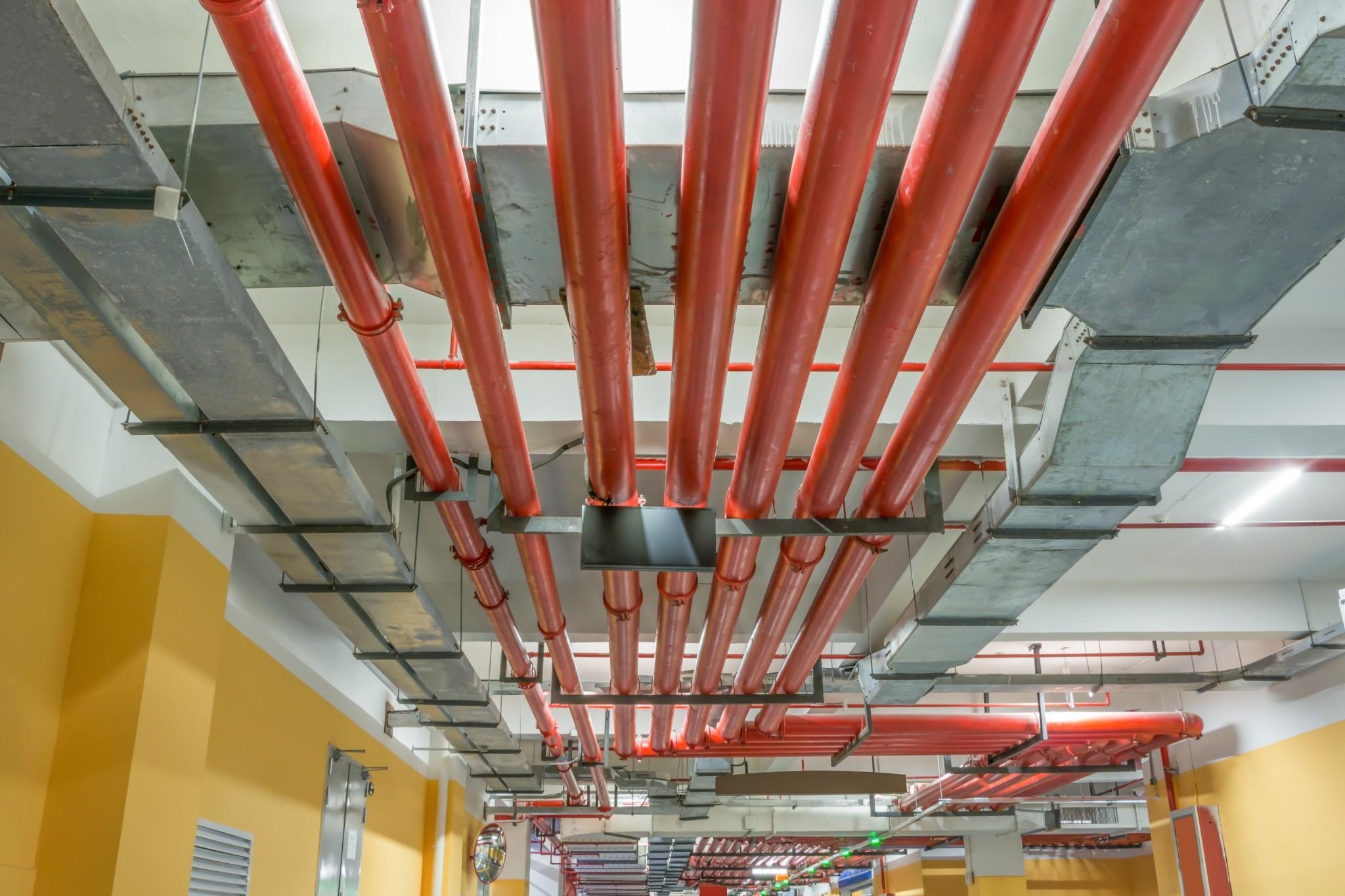
When people think of commercial fire protection, they often picture a fire sprinkler system. While there are several types of fire sprinkler systems available, wet pipe fire sprinkler systems remain the most widely installed solution in commercial buildings across the United States.
Their simple design, proven reliability, lower maintenance requirements, and ability to respond quickly during a fire have made wet pipe systems the preferred choice for millions of commercial facilities. From office buildings and schools to healthcare facilities, retail centers, and apartment buildings, wet pipe sprinkler systems provide dependable protection while helping businesses meet fire code requirements and protect lives and property.
This guide explains why wet pipe systems are the industry’s most common fire protection solution, where they are used, and when another sprinkler system may be a better choice.
Why Wet Pipe Fire Sprinkler Systems Are So Popular
Wet pipe sprinkler systems are called “wet” because the piping is constantly filled with water under pressure. When heat from a fire activates an individual sprinkler head, water is immediately discharged onto the fire.
Because water is already inside the piping network, there is virtually no delay between sprinkler activation and water discharge. This rapid response helps control fires early, often before they have an opportunity to spread throughout a building.
Their straightforward design also makes wet pipe systems one of the most reliable forms of automatic fire protection available today.
How Wet Pipe Fire Sprinkler Systems Work
Despite their effectiveness, wet pipe systems operate using a surprisingly simple process.
During normal operation:
• Sprinkler piping remains filled with pressurized water.
• Individual sprinkler heads remain closed.
• Each sprinkler activates independently.
• Only sprinkler heads exposed to sufficient heat will operate.
• Water is discharged directly onto the fire.
Contrary to popular myths, all sprinkler heads do not activate at the same time. Only the sprinkler heads exposed to high temperatures will open, allowing water to flow only where it is needed.
This targeted response helps minimize both fire damage and unnecessary water damage.
Benefits of Wet Pipe Fire Sprinkler Systems
Wet pipe systems offer several advantages that make them ideal for many commercial occupancies.
Fast Response
Because water is already inside the piping, wet pipe systems provide the fastest sprinkler response of any traditional sprinkler system.
Simple Design
Fewer moving parts result in fewer maintenance concerns and increased long-term reliability.
Lower Installation Costs
Wet pipe systems are generally less complex than dry pipe or pre-action systems, often reducing installation costs.
Reduced Maintenance
Compared to more specialized sprinkler systems, wet pipe systems typically require less ongoing maintenance while remaining highly dependable.
Proven Performance
Wet pipe sprinkler systems have protected commercial buildings for decades and continue to demonstrate outstanding fire control capabilities.
Buildings That Commonly Use Wet Pipe Systems
Wet pipe sprinkler systems are appropriate for buildings where interior temperatures remain above freezing year-round.
Common applications include:
• Office Buildings
• Healthcare Facilities
• Schools and Universities
• Retail Centers
• Apartment Buildings
• Hotels
• Government Buildings
• Churches
• Mixed-Use Developments
• Commercial Facilities
These occupancies benefit from the system’s simplicity, reliability, and rapid fire suppression capabilities.
When Wet Pipe Systems May Not Be the Best Choice
Although wet pipe systems work well in many buildings, they are not appropriate for every application.
Facilities exposed to freezing temperatures require alternative fire protection solutions.
Examples include:
• Unheated warehouses
• Parking garages
• Loading docks
• Exterior canopies
• Refrigerated facilities
• Freezer storage
• Cold storage warehouses
In these environments, water-filled piping could freeze, causing significant damage and preventing the system from operating properly.
Other Fire Sprinkler Systems to Consider
Depending on your facility’s hazards and operating conditions, another sprinkler system may provide better protection.
Dry Pipe Fire Sprinkler Systems
Designed for areas exposed to freezing temperatures, dry pipe systems use pressurized air or nitrogen inside the piping until sprinkler activation allows water to enter the system.
Pre-Action Fire Sprinkler Systems
Frequently installed in data centers, museums, archives, and telecommunications facilities where accidental water discharge must be minimized.
Deluge Fire Sprinkler Systems
Designed for high-hazard industrial occupancies where rapid fire spread is possible. Deluge systems discharge water through all open sprinkler nozzles simultaneously after activation.
ESFR Fire Sprinkler Systems
Engineered specifically for modern warehouses with high-piled storage. ESFR systems suppress fires quickly while reducing the need for in-rack sprinklers in many applications.
In-Rack Fire Sprinkler Systems
Installed directly within storage racks to improve fire control in warehouses storing high-challenge commodities.
Quell Fire Sprinkler Systems
Specialized sprinkler technology designed for cold storage facilities, distribution centers, and warehouses storing cartoned expanded plastics and other challenging commodities.
Choosing the Right Fire Protection System
Selecting the appropriate sprinkler system depends on several factors.
These include:
• Building occupancy
• Construction type
• Storage arrangements
• Fire hazards
• Environmental conditions
• Water supply
• Future expansion plans
• Applicable NFPA standards
• Local Authority Having Jurisdiction (AHJ) requirements
A fire protection professional can evaluate these factors to determine which system best meets your facility’s needs.
Inspection and Maintenance Requirements
Like all commercial fire protection systems, wet pipe sprinkler systems require routine inspection, testing, and maintenance.
NFPA 25 establishes the requirements for maintaining water-based fire protection systems.
Routine services may include:
• Visual inspections
• Main drain testing
• Alarm device testing
• Valve inspections
• Waterflow testing
• Obstruction investigations
• Internal pipe inspections
• Preventive maintenance
• Required documentation
Regular inspections help identify deficiencies before they become costly problems while ensuring the system remains ready to respond during an emergency.
Wet Pipe Systems Are Part of a Complete Fire Protection Strategy
Although wet pipe sprinkler systems provide outstanding fire suppression, they work best when integrated with other fire protection systems.
A comprehensive commercial fire protection program may include:
• Fire Alarm Systems
• Fire Alarm Monitoring
• Fire Pumps
• Portable Fire Extinguishers
• Special Hazard Fire Suppression Systems
• Kitchen Hood Suppression Systems
• Backflow Preventers
• Emergency & Exit Lighting
Together, these systems create multiple layers of protection that improve occupant safety, reduce property loss, and support business continuity.
Protect Your Facility with the Right Fire Protection System
Wet pipe fire sprinkler systems continue to be the most common commercial fire protection system because they combine simplicity, reliability, and proven performance. However, every building has unique operational requirements and fire risks. Choosing the right sprinkler system requires careful evaluation of your occupancy, hazards, environmental conditions, and long-term business needs.
Whether you’re constructing a new building, expanding an existing facility, or upgrading your fire protection systems, we can help you design, install, inspect, test, maintain, and service a fire protection solution that keeps your facility safe, compliant, and prepared for the future.