
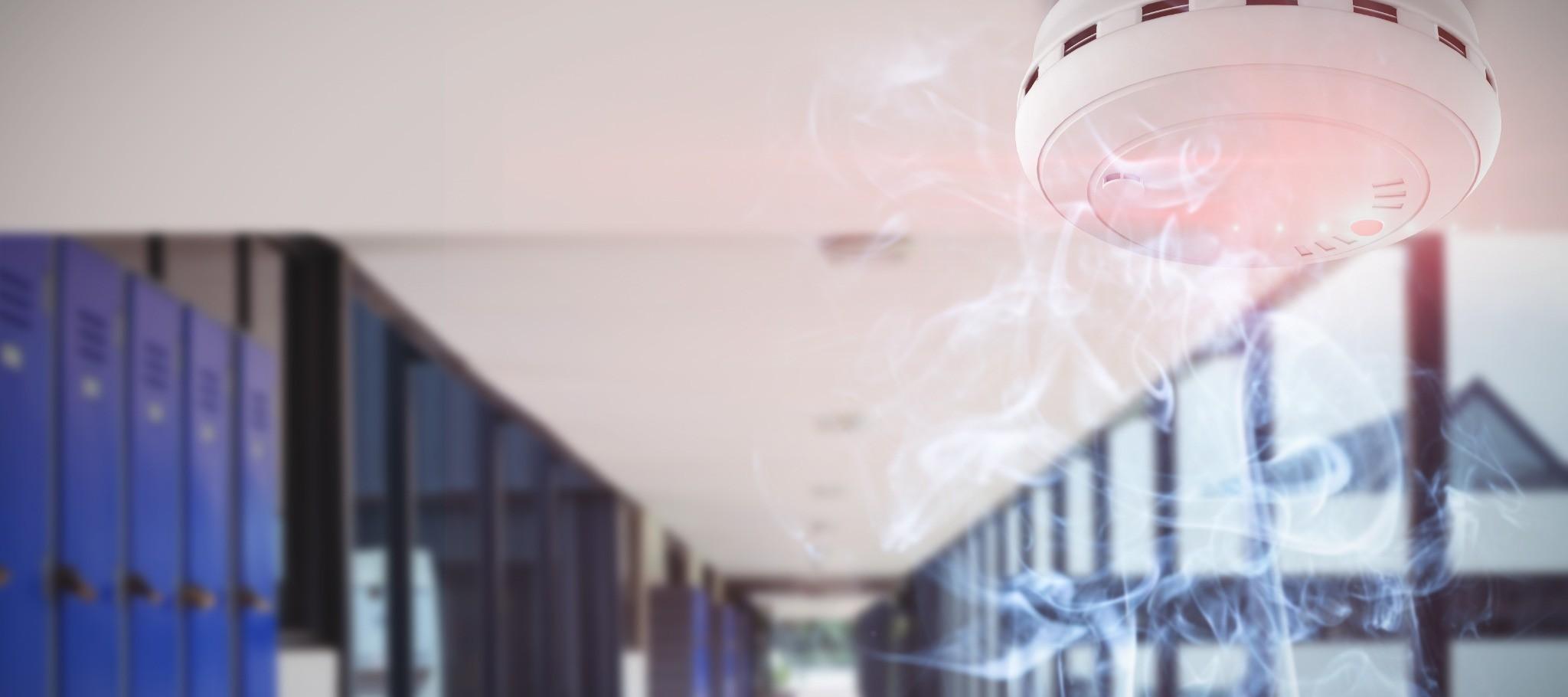
When a fire starts inside a commercial building, every second matters. The sooner smoke or heat is detected, the faster occupants can evacuate, emergency responders can be notified, and fire protection systems can begin working to control the situation. Early detection is one of the most important factors in reducing injuries, minimizing property damage, and protecting business operations.
Modern commercial fire and smoke detection systems do much more than sound an alarm. They are intelligent life safety systems that detect developing fire conditions, communicate with building occupants, activate other fire protection equipment, and notify monitoring centers and emergency responders. When properly designed, installed, inspected, and maintained, these systems provide the critical first layer of protection for virtually every commercial facility.
Why Early Fire Detection Matters
Many commercial fires begin long before flames become visible. Electrical failures, overheating equipment, smoldering materials, or hidden ignition sources can generate smoke long before a fire spreads throughout a building.
Detecting these conditions early provides valuable time to:
• Alert occupants
• Begin evacuation procedures
• Notify emergency responders
• Activate integrated fire protection systems
• Reduce fire growth
• Limit smoke damage
• Minimize business interruption
The earlier a fire is detected, the greater the opportunity to control the incident before it becomes catastrophic.
How Commercial Fire Detection Systems Work
Commercial fire detection systems continuously monitor a building for signs of smoke, heat, or fire.
When an initiating device detects an abnormal condition, the system immediately communicates with the fire alarm control panel. Depending on the building and system configuration, it can then:
• Sound audible alarms
• Activate visual notification devices
• Broadcast voice evacuation messages
• Notify a monitoring center
• Dispatch emergency responders
• Monitor fire sprinkler system activity
• Release fire doors
• Recall elevators
• Control smoke management systems
• Unlock designated exits
This coordinated response helps protect occupants while reducing emergency response times.
Smoke Detectors vs. Heat Detectors
Not every area of a building requires the same type of detection device.
Smoke Detectors
Smoke detectors are designed to identify smoke particles before temperatures become extremely high. They provide the earliest possible warning and are commonly installed throughout offices, schools, healthcare facilities, hotels, retail buildings, and commercial occupancies.
Heat Detectors
Heat detectors respond to elevated temperatures rather than smoke. They are commonly installed where normal environmental conditions could cause nuisance smoke alarms.
Typical applications include:
• Commercial kitchens
• Mechanical rooms
• Manufacturing facilities
• Warehouses
• Loading docks
• Parking structures
• Industrial environments
Many commercial buildings utilize both technologies to maximize protection while reducing false alarms.
Types of Smoke Detection Technologies
Modern commercial fire alarm systems utilize several types of smoke detection depending on the occupancy and level of protection required.
Photoelectric Smoke Detectors
Photoelectric detectors are particularly effective at identifying slow, smoldering fires that produce large smoke particles before open flames develop.
Ionization Smoke Detectors
Ionization detectors respond more quickly to rapidly developing flaming fires involving combustible materials.
Beam Smoke Detection
Beam detectors use projected light beams to protect large open spaces where traditional spot detectors may not provide adequate coverage.
Common applications include:
• Warehouses
• Distribution centers
• Aircraft hangars
• Gymnasiums
• Manufacturing facilities
Aspirating Smoke Detection
Aspirating smoke detection systems continuously sample air through small piping networks and can identify extremely small amounts of smoke.
These systems are commonly installed in:
• Data centers
• Telecommunications facilities
• Museums
• Archives
• Clean rooms
• Mission-critical environments
Their exceptional sensitivity allows them to detect fire conditions before visible smoke develops.
Detection Is Only One Part of the Fire Alarm System
Fire detection devices are only one component of a complete commercial fire alarm system.
Other components often include:
• Fire alarm control panels
• Manual pull stations
• Horns and strobes
• Voice evacuation systems
• Remote annunciators
• Emergency communication systems
• Fire alarm monitoring
• Backup power supplies
Together, these components provide a coordinated response during an emergency.
Integration with Other Fire Protection Systems
One of the greatest advantages of modern commercial fire alarm systems is their ability to integrate with other life safety systems.
Fire detection systems may interface with:
• Fire sprinkler systems
• Fire alarm monitoring
• Fire pumps
• Smoke control systems
• Access control systems
• Security systems
• Emergency lighting
• Elevator controls
• Building automation systems
This integration creates multiple layers of protection that improve occupant safety while minimizing property loss.
Fire Alarm Monitoring Enhances Protection
Detection is only valuable if someone receives the alarm.
Professional fire alarm monitoring ensures alarm signals are transmitted immediately to a UL-listed monitoring center where trained operators can notify emergency responders.
Benefits include:
• 24/7 monitoring
• Faster emergency notification
• Protection during unoccupied hours
• Reduced dependence on building personnel
• Improved business continuity
Monitoring helps ensure that alarm signals receive immediate attention regardless of the time of day.
Commercial Buildings That Benefit from Advanced Detection
Nearly every commercial occupancy benefits from professionally designed fire detection systems.
Common applications include:
• Office buildings
• Healthcare facilities
• Manufacturing plants
• Warehouses
• Schools and universities
• Hotels
• Retail centers
• Government buildings
• Industrial facilities
• Data centers
Each occupancy requires detection devices appropriate for its specific hazards, occupancy classification, and code requirements.
Inspection and Testing Are Essential
Like all fire protection systems, smoke detection equipment requires routine inspection, testing, and maintenance.
Regular service helps verify:
• Detector sensitivity
• Proper device operation
• Battery backup performance
• Communication reliability
• Alarm notification
• Documentation compliance
Routine inspections also help identify dirty detectors, damaged devices, aging equipment, and other issues before they affect system performance.
NFPA Standards for Fire Detection Systems
Commercial fire detection systems are designed and maintained in accordance with nationally recognized standards.
Frequently referenced codes include:
• NFPA 72 – National Fire Alarm and Signaling Code
• NFPA 70 – National Electrical Code
• NFPA 101 – Life Safety Code
Additional requirements may apply depending on the occupancy type and local Authority Having Jurisdiction (AHJ).
Why Professional Design Matters
Every commercial building presents unique challenges. Occupancy type, ceiling height, airflow, equipment, storage arrangements, and operational hazards all influence detector selection and placement.
A professionally designed fire detection system helps ensure:
• Proper detector coverage
• Faster fire detection
• Reduced false alarms
• Compliance with applicable codes
• Integration with other life safety systems
• Long-term reliability
Choosing the correct detection technology from the beginning improves both safety and system performance.
Protect Your Facility with Advanced Fire Detection
Early detection is the foundation of every effective fire protection strategy. By identifying smoke or heat in the earliest stages of a fire, commercial fire detection systems help protect occupants, reduce property damage, and support faster emergency response.
Whether you’re constructing a new facility, upgrading an existing fire alarm system, or expanding your building, we provide complete fire alarm design, installation, inspections, testing, monitoring, maintenance, and repair services. Our experienced team can help you develop a fire detection solution that keeps your facility protected, compliant, and prepared for the unexpected.