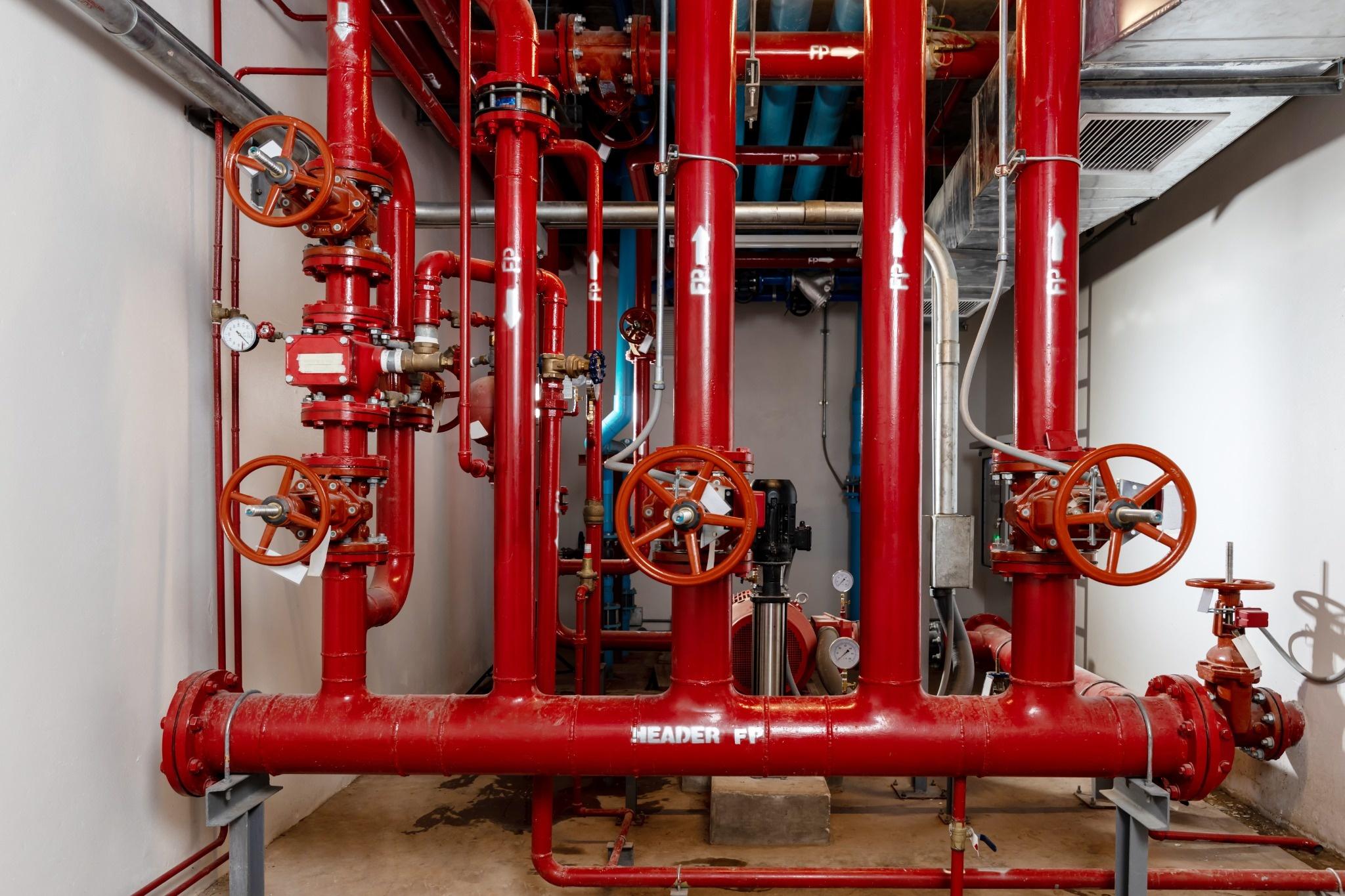
Dry Pipe Fire Sprinkler Systems for Cold Environments
Dry pipe fire sprinkler systems are engineered for environments where freezing temperatures could damage traditional water-filled piping. These systems use pressurized air or nitrogen inside the piping network until sprinkler activation occurs, helping protect commercial facilities exposed to cold conditions while maintaining fire protection compliance.
Recommended Applications
Dry pipe systems are commonly used in:
- Warehouses
- Parking garages
- Cold storage facilities
- Loading docks
- Unheated attics
- Exterior canopies
- Freezer facilities
How Dry Pipe Systems Work
Unlike wet pipe systems, dry pipe systems contain pressurized air or nitrogen within the piping. When a sprinkler head activates, the air pressure drops, allowing a dry pipe valve to release water into the system piping and onto the fire area.
Benefits of Dry Pipe Systems
- Freeze protection
- Reduced risk of burst pipes
- Suitable for unheated spaces
- Supports cold storage applications
- Improved corrosion control when nitrogen is used
Inspection & Maintenance Requirements
Dry pipe systems require more specialized testing and maintenance than wet systems, including:
- Annual trip testing
- Air compressor inspections
- Low-point drain inspections
- Valve maintenance
- Internal pipe condition assessments
- Nitrogen generator evaluations
Common Dry Pipe System Deficiencies
- Corrosion buildup
- Condensation inside piping
- Air leaks
- Slow trip times
- Frozen auxiliary drains
- Improper air pressure settings
Relevant NFPA Standards
Dry Pipe Fire Sprinkler Systems FAQs
Why use a dry pipe sprinkler system?
Dry pipe systems help prevent water-filled pipes from freezing in cold environments.
What is the difference between dry pipe and wet pipe systems?
Dry pipe systems contain air or nitrogen in the piping until activation occurs, while wet pipe systems always contain water.
Are dry pipe systems harder to maintain?
They typically require additional testing and maintenance due to their mechanical components and air supply systems.
Request A Quote
VFPG News
- Commercial Fire Protection Systems: The Complete Guide to Protecting Your Business
- The Ultimate Guide to Commercial Fire Code Compliance: NFPA Standards, Inspections, and Staying Ahead of Changing Regulations
- The Ultimate Guide to Commercial Fire Alarm Systems: Design, Code Requirements, Wireless Technology, Warranties, and Multi-Building Protection
- Commercial Fire Sprinkler Maintenance: The Complete Guide to Inspections, Repairs, Corrosion Prevention, and Long-Term Reliability
- Commercial Fire Alarm Inspections: The Complete Guide to Inspection Frequencies, Testing Requirements, and Code Compliance
- Commercial Fire Inspections: The Complete Guide to Code Compliance, Safety, and Protecting Your Business
- Why Does Your Commercial Fire Alarm Keep Going Off? Common Causes and How to Fix Them
- The 5 Types of Commercial Fire Extinguishers: Which One Does Your Business Need?
- How Fire Sprinkler Systems Minimize Fire Damage in Commercial Buildings
- High-Rise Fire Protection Systems: Essential Life Safety Solutions for Tall Buildings
VFPG Companies