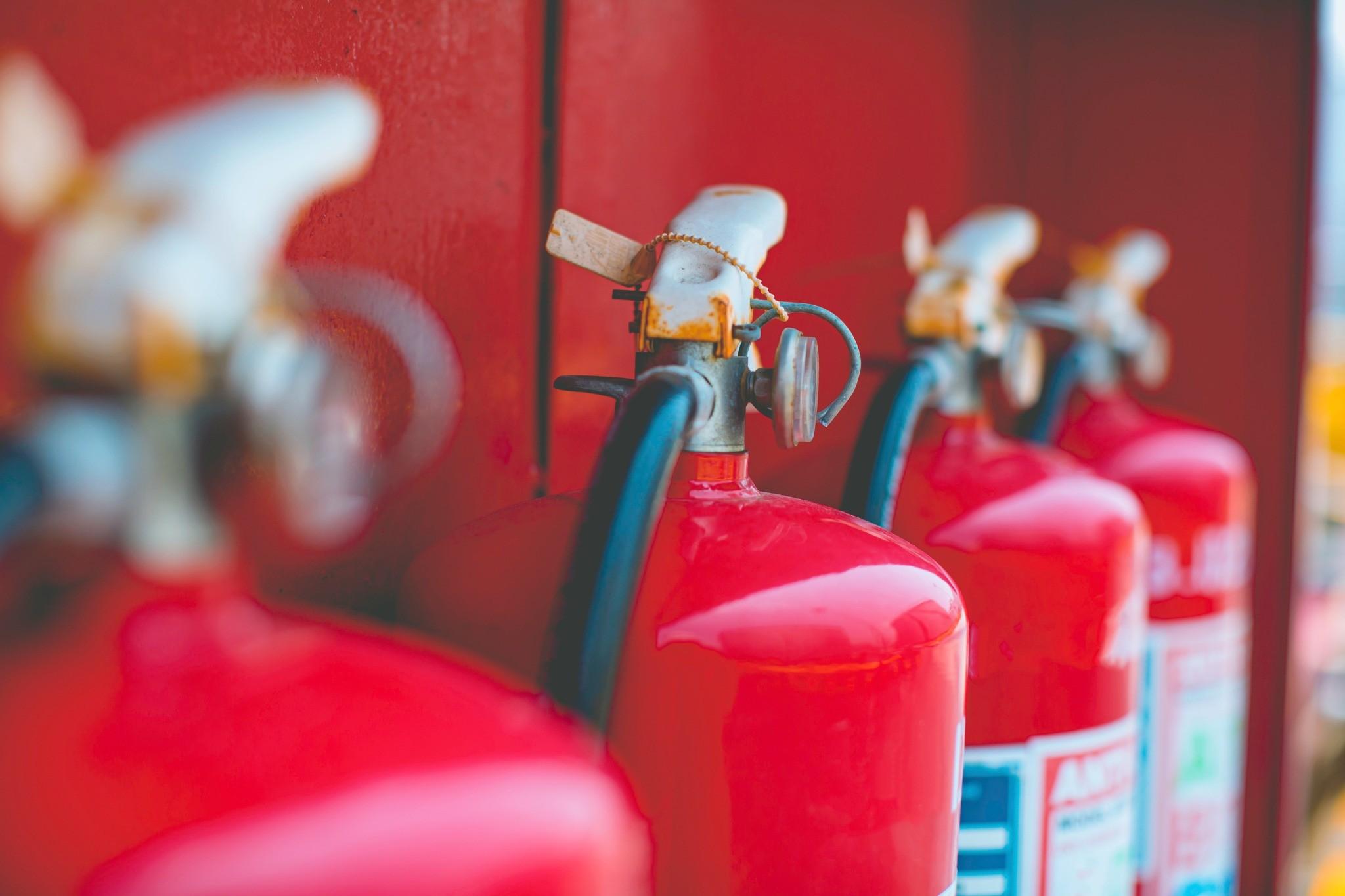
Portable fire extinguishers are one of the simplest yet most important components of a commercial fire protection program. When a fire is discovered in its earliest stages, the proper fire extinguisher can often prevent it from becoming a much larger emergency. However, using the wrong extinguisher can make a fire significantly worse, create additional hazards, or place employees in danger.
Every commercial building should have fire extinguishers that are appropriate for the hazards present within the facility. From office buildings and warehouses to manufacturing plants, healthcare facilities, restaurants, schools, and industrial operations, understanding the different types of extinguishers is essential for protecting people, property, and business operations.
This guide explains the five primary fire extinguisher classifications, where each should be used, inspection requirements, and best practices for maintaining compliance.
Why Fire Extinguishers Are Important
Portable fire extinguishers provide occupants with the opportunity to control small fires before they spread beyond the point of origin.
When used properly, extinguishers can:
• Suppress small fires
• Reduce property damage
• Protect occupants
• Limit business interruption
• Support evacuation
• Assist emergency responders
• Reduce fire spread
Fire extinguishers are not intended to replace automatic fire sprinkler systems or fire alarm systems. Instead, they provide another important layer of protection within a comprehensive fire protection strategy.
Understanding Fire Classes
Before selecting an extinguisher, it’s important to understand the different classes of fire.
Different fuels require different extinguishing agents.
The five primary fire classes include:
• Class A – Ordinary combustible materials
• Class B – Flammable liquids
• Class C – Energized electrical equipment
• Class D – Combustible metals
• Class K – Commercial cooking oils and fats
Using an extinguisher designed for the wrong fire class may be ineffective or even dangerous.
Class A Fire Extinguishers
Class A extinguishers are designed for ordinary combustible materials.
These include:
• Paper
• Cardboard
• Wood
• Cloth
• Rubber
• Many plastics
Class A extinguishers are commonly found in:
• Office buildings
• Schools
• Hotels
• Retail stores
• Healthcare facilities
• Apartment buildings
Water and multipurpose dry chemical extinguishers are frequently used for Class A hazards.
Class B Fire Extinguishers
Class B extinguishers protect against fires involving flammable and combustible liquids.
Examples include:
• Gasoline
• Diesel fuel
• Oil
• Paint
• Solvents
• Alcohol
• Hydraulic fluids
These extinguishers are commonly installed in:
• Manufacturing facilities
• Automotive service centers
• Maintenance shops
• Fuel storage facilities
• Industrial plants
Foam, carbon dioxide (CO₂), and dry chemical extinguishers are commonly used for Class B fires.
Class C Fire Extinguishers
Class C extinguishers are designed for energized electrical equipment.
Typical hazards include:
• Electrical panels
• Switchgear
• Server rooms
• Electrical equipment
• Computers
• Transformers
• Control panels
Because electricity presents an additional hazard, extinguishing agents must be non-conductive.
CO₂ and dry chemical extinguishers are commonly used for Class C fires.
Class D Fire Extinguishers
Class D extinguishers are designed specifically for combustible metal fires.
Examples include:
• Magnesium
• Titanium
• Sodium
• Potassium
• Lithium metal
These specialized extinguishers are generally found in:
• Metal manufacturing
• Aerospace facilities
• Chemical processing plants
• Specialized industrial operations
Because combustible metal fires react differently than ordinary fires, Class D extinguishers contain specialized extinguishing agents.
Class K Fire Extinguishers
Class K extinguishers are specifically designed for commercial kitchens.
They protect against fires involving:
• Vegetable oils
• Animal fats
• Deep fryers
• Commercial cooking appliances
Class K extinguishers are commonly installed in:
• Restaurants
• Hotels
• Hospitals
• Schools
• Cafeterias
• Commercial kitchens
These extinguishers work together with kitchen hood fire suppression systems to protect cooking operations.
Multipurpose ABC Fire Extinguishers
Many commercial buildings utilize multipurpose ABC dry chemical extinguishers.
These extinguishers protect against:
• Class A fires
• Class B fires
• Class C fires
Because they cover several common fire hazards, ABC extinguishers are widely used throughout commercial office buildings, schools, warehouses, retail centers, and general commercial occupancies.
Choosing the Right Fire Extinguisher
Selecting the appropriate extinguisher depends on several factors.
These include:
• Occupancy type
• Fire hazards
• Building layout
• Equipment present
• Local code requirements
• NFPA standards
• AHJ requirements
A professional fire protection evaluation helps ensure extinguishers are properly selected and located throughout the facility.
Where Fire Extinguishers Should Be Installed
Fire extinguishers should be installed where they are easily accessible during an emergency.
Common locations include:
• Building exits
• Hallways
• Mechanical rooms
• Electrical rooms
• Manufacturing areas
• Warehouse aisles
• Commercial kitchens
• Fuel storage areas
Placement requirements depend on the occupancy classification, hazard level, and applicable fire codes.
Fire Extinguisher Inspections
Installing extinguishers is only the first step.
Regular inspections help ensure extinguishers remain ready for use.
Routine services typically include:
• Monthly visual inspections
• Annual maintenance inspections
• Recharge after use
• Pressure verification
• Tamper seal inspection
• Hose inspection
• Physical condition evaluation
• Mounting verification
Routine maintenance helps identify damaged or discharged extinguishers before an emergency occurs.
When Should Fire Extinguishers Be Replaced?
Although many extinguishers can be recharged after use, replacement may be necessary when:
• The cylinder is damaged.
• Corrosion is present.
• Pressure cannot be maintained.
• Components have failed.
• The extinguisher no longer meets applicable standards.
Regular inspections help determine whether repair, recharge, or replacement is appropriate.
NFPA 10 Requirements
Commercial portable fire extinguishers are governed by NFPA 10, the Standard for Portable Fire Extinguishers.
NFPA 10 establishes requirements for:
• Extinguisher selection
• Installation
• Inspection
• Maintenance
• Testing
• Recharging
• Recordkeeping
Compliance helps ensure extinguishers remain available and functional when needed.
Fire Extinguishers Are Part of a Complete Fire Protection Strategy
Portable extinguishers work best when combined with other commercial fire protection systems.
A comprehensive fire protection program may include:
• Fire Alarm Systems
• Fire Alarm Monitoring
• Fire Sprinkler Systems
• Fire Pumps
• Kitchen Hood Fire Suppression Systems
• Special Hazard Fire Suppression Systems
• Emergency Lighting
• Backflow Preventers
Each system performs a different function while working together to improve occupant safety and reduce property loss.
Employee Training Matters
Even the best fire extinguisher is ineffective if employees do not know how to use it safely.
Facilities should provide training on:
• Fire extinguisher locations
• Fire classifications
• Proper extinguisher selection
• Basic extinguisher operation
• Emergency evacuation procedures
• When not to fight a fire
Employees should only attempt to extinguish small, incipient-stage fires when it is safe to do so and they have received appropriate training.
Protect Your Business with Proper Fire Extinguisher Service
Portable fire extinguishers remain one of the first lines of defense against small commercial fires. Selecting the correct extinguisher, placing it in the proper location, and maintaining it according to NFPA standards helps improve workplace safety while supporting compliance and reducing fire risk.
Whether you need fire extinguisher inspections, annual maintenance, recharging, hydrostatic testing, replacements, or a complete facility assessment, we provide comprehensive fire extinguisher services for commercial facilities across virtually every industry. Our experienced team can help ensure your building has the right extinguishers in the right locations—and that they’re ready to perform when every second counts.