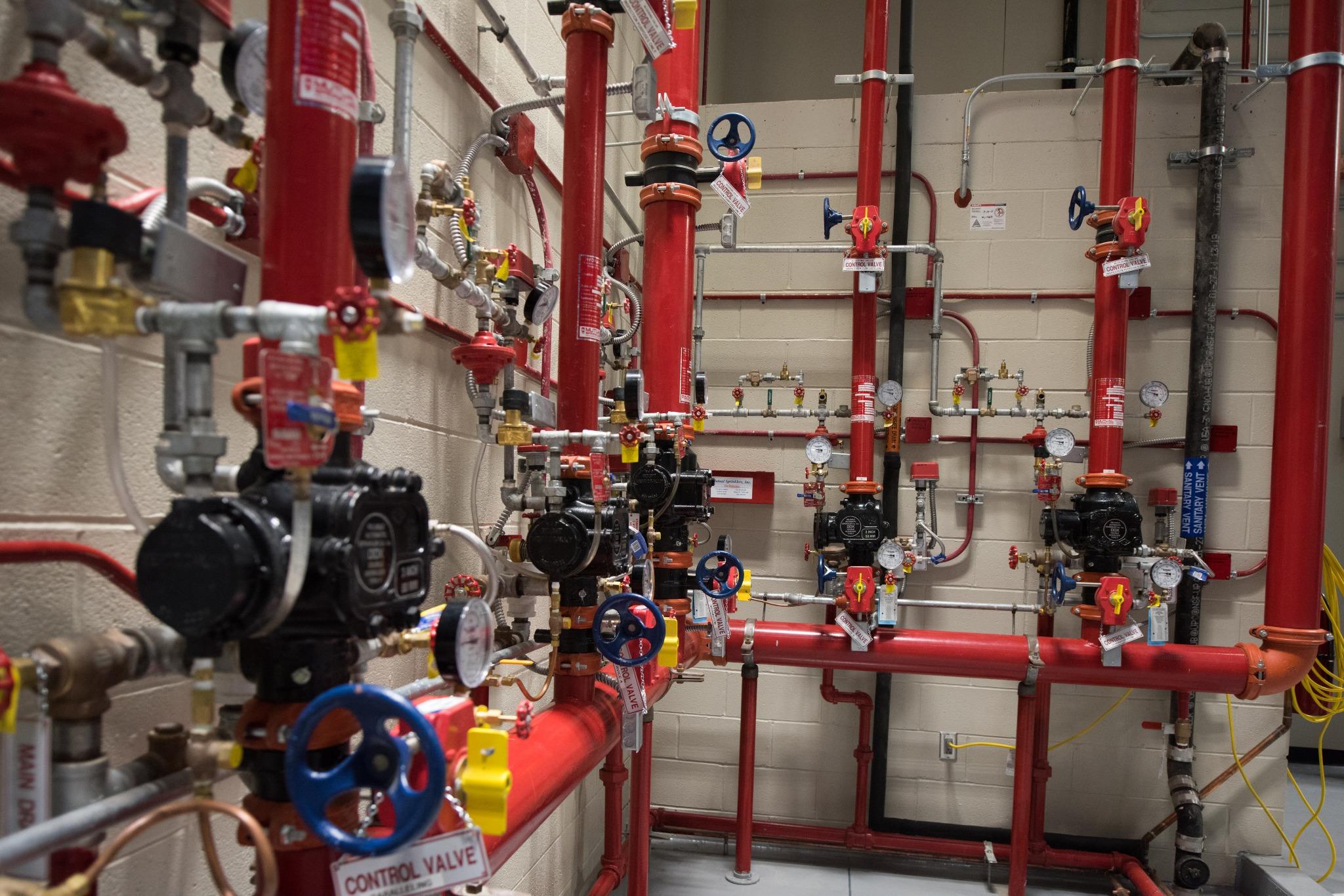
Fire sprinkler systems are one of the most effective tools available for controlling fires and protecting lives and property. In fact, automatic sprinkler systems have helped save countless lives and significantly reduce property loss for decades. But while sprinklers are a critical component of any fire protection strategy, they are only one piece of a much larger life safety ecosystem.
The reality is that true protection happens when all fire and life safety systems work together as an integrated solution. Fire alarms, suppression systems, monitoring, extinguishers, backflow preventers, emergency lighting, and security systems each play a unique role in protecting your people, property, and operations.
The question facility managers and building owners should be asking isn’t simply, “Do we have fire sprinklers?” It’s, “Are all of our life safety systems working together to provide complete protection?”
Fire Protection Is a System—Not a Single Service
A properly protected facility relies on multiple systems that are designed to detect, communicate, suppress, and support emergency response efforts. Each system serves a specific purpose, but no single system can provide complete protection on its own.
For example:
- Fire alarm systems detect and communicate emergencies.
- Fire sprinkler systems help control or suppress fires.
- Fire suppression systems protect specialized hazards.
- Monitoring services ensure emergency signals are transmitted when facilities are unoccupied.
- Fire extinguishers provide immediate response capabilities.
- Emergency and exit lighting help occupants evacuate safely.
- Security and access control systems can support emergency response and facility management.
When these systems are properly designed, inspected, tested, and maintained, they work together to create a comprehensive fire and life safety strategy.
According to the National Fire Protection Association (NFPA), fire protection systems must be regularly inspected, tested, and maintained to ensure they perform as intended during an emergency. A failure in one system can affect the overall effectiveness of your facility’s life safety program.
The Hidden Risks of Protection Gaps
Many facilities unknowingly develop protection gaps over time. A sprinkler system may be inspected regularly while fire extinguishers are overlooked. A fire alarm system may be maintained, but monitoring communications have not been upgraded. Emergency lighting may have failing batteries that go unnoticed until an outage occurs.
These gaps often remain hidden until an inspection, audit, or emergency reveals the problem.
Common examples include:
- Overdue inspections
- Missing maintenance records
- Deficient fire alarm devices
- Expired extinguisher certifications
- Impaired fire pumps
- Failed backflow preventers
- Outdated monitoring communicators
- Non-functional emergency lighting
The challenge becomes even greater when multiple vendors are responsible for different systems. Documentation is scattered, inspection schedules vary, and communication between providers may be limited.
Compliance Is More Complex Than Ever
Today’s commercial facilities must navigate a wide range of codes, standards, insurance requirements, and local regulations. Different systems are governed by different standards, each with its own inspection, testing, and maintenance requirements.
Examples include:
- Fire Sprinkler Systems — NFPA 25
- Fire Alarm Systems — NFPA 72
- Fire Extinguishers — NFPA 10
- Kitchen Hood Suppression Systems — NFPA 96 and NFPA 17A
- Fire Pumps — NFPA 25
- Clean Agent Suppression Systems — NFPA 2001
Additional information on these standards can be found through the NFPA Codes & Standards Directory.
When inspections are missed or deficiencies remain unresolved, facilities may face:
- Failed audits
- AHJ violations
- Increased liability exposure
- Insurance concerns
- Unexpected repair costs
- Operational disruptions
Maintaining compliance across multiple systems and vendors can quickly become a full-time responsibility.
Why One Fire Protection Partner Makes a Difference
One of the most effective ways to simplify compliance and reduce risk is to work with a single provider that understands your entire facility.
Rather than coordinating multiple contractors, schedules, reports, and service records, a single fire protection partner can provide a more streamlined approach to life safety management.
Benefits include:
- One Point of Contact – A single relationship simplifies communication, scheduling, and accountability.
- Coordinated Inspection Schedules – Inspections can often be grouped together, reducing disruptions and helping ensure nothing is overlooked.
- Centralized Documentation – Service reports, inspection records, deficiency tracking, and compliance documentation are easier to manage and access.
- Better Facility Knowledge – Over time, a dedicated service partner develops a deeper understanding of your systems, facility operations, and long-term goals.
- Improved Accountability – When one team manages multiple systems, there is less opportunity for responsibilities to fall between vendors.
A Complete Fire & Life Safety Approach
At VFPG, we believe facilities are best protected when every life safety system is managed as part of a unified strategy.
Our teams provide inspection, testing, maintenance, repair, installation, and monitoring services across a wide range of fire and life safety systems, including:
-
- Fire Alarm Systems
- Fire Sprinkler Systems
- Fire Suppression & Special Hazard Systems
- 24/7 Fire Alarm Monitoring
- Fire Extinguishers
- Backflow Preventers
- Kitchen Hood Suppression Systems
- Security & Access Control Systems
- Fire Pumps
- Hydrants & Underground Fire Protection
- Emergency & Exit Lighting
By coordinating these services under one provider, we help facilities simplify compliance efforts, improve operational efficiency, and strengthen overall protection.
- The Benefits of a Full-System Fire Protection Strategy – Facilities that take a comprehensive approach to fire protection often experience measurable benefits, including:
- Improved Compliance Performance – Coordinated inspections and maintenance help reduce missed requirements and improve audit readiness.
- Reduced Long-Term Risk – Proactive maintenance and system oversight help identify issues before they become costly problems.
- Faster Emergency Response – Integrated systems improve communication, notification, and suppression capabilities during emergencies.
- Greater Operational Efficiency – Managing multiple life safety systems through a single provider simplifies scheduling, reporting, and budgeting.
- Increased Peace of Mind – Knowing that all systems are being properly maintained allows facility managers to focus on their core responsibilities.
Fire Sprinklers Are Where Protection Starts—Not Where It Ends
Fire sprinkler systems remain one of the most important life safety investments a facility can make. However, relying on sprinklers alone leaves critical gaps that could impact safety, compliance, and operational continuity.
The most effective facilities take a complete-system approach—one that combines detection, notification, suppression, monitoring, emergency response support, and ongoing maintenance into a unified strategy.
When every system works together, protection becomes stronger, compliance becomes easier, and risk becomes more manageable.
Need Help Identifying Potential Gaps?
If you’re unsure whether all of your fire and life safety systems are working together effectively, we can help. Our team can review your current systems, inspection schedules, and compliance requirements to identify opportunities for improvement and help you build a more comprehensive protection strategy.
Sometimes the most valuable outcome isn’t finding a problem—it’s gaining confidence that your facility is fully protected.