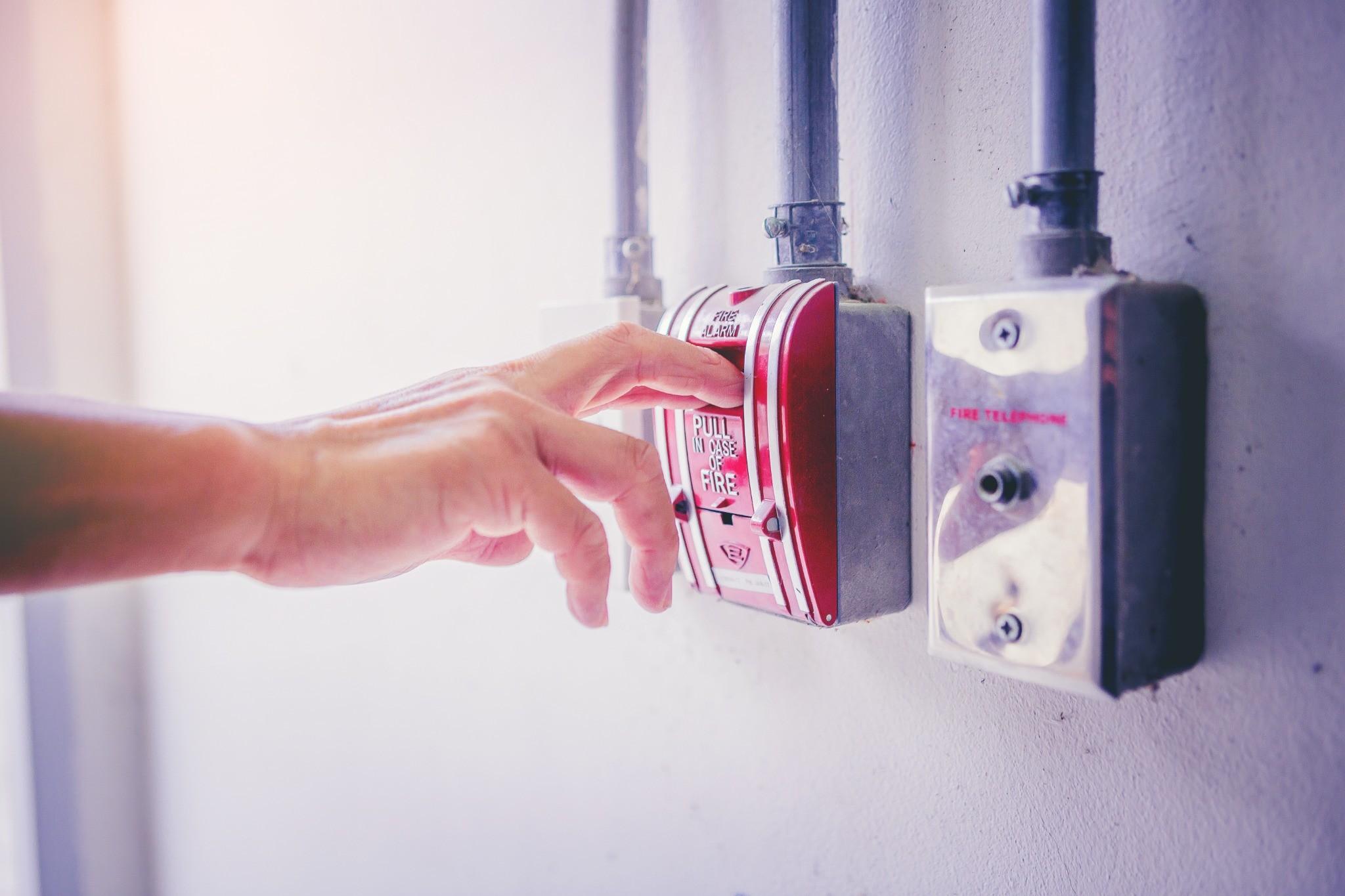
A commercial fire alarm system is one of the most important life safety investments a building owner can make. Its primary purpose is to detect fire conditions early, alert occupants, notify emergency responders, and work alongside other fire protection systems to minimize injuries, property damage, and business interruption.
However, not all fire alarm systems are the same. Different building types, occupancies, and operational needs require different system designs. Selecting the right fire alarm system can improve reliability, simplify maintenance, reduce nuisance alarms, and ensure long-term compliance with fire codes.
This guide explains the four primary types of commercial fire alarm systems, how each works, where they’re commonly used, and how to determine which system is best for your facility.
Why Choosing the Right Fire Alarm System Matters
Every commercial building presents unique fire protection challenges. Factors such as building size, occupancy, ceiling height, occupant load, and operational hazards all influence which type of fire alarm system should be installed.
The right fire alarm system helps:
• Detect fires earlier
• Improve occupant safety
• Simplify emergency response
• Reduce false alarms
• Support code compliance
• Integrate with other life safety systems
• Lower long-term maintenance costs
• Allow for future expansion
Selecting the proper system during the design phase can prevent costly upgrades later.
Category 1: Conventional Fire Alarm Systems
Conventional fire alarm systems divide a building into multiple zones.
When an alarm activates, the control panel identifies which zone contains the initiating device but does not identify the exact detector or pull station.
These systems are best suited for:
• Small office buildings
• Small retail facilities
• Restaurants
• Small churches
• Stand-alone commercial buildings
• Smaller warehouses
Advantages include:
• Lower installation costs
• Simple operation
• Reliable performance
• Straightforward maintenance
Limitations include:
• Limited information during an alarm
• More difficult troubleshooting
• Less flexibility for expansion
• Larger wiring requirements
Although conventional systems remain effective for smaller buildings, many modern facilities now utilize addressable technology.
Category 2: Addressable Fire Alarm Systems
Addressable fire alarm systems are the most common solution for today’s commercial buildings.
Unlike conventional systems, every initiating device has its own unique address, allowing the control panel to identify the exact location of an alarm.
For example, instead of displaying “Zone 4 Alarm,” an addressable system may identify:
“Second Floor – Mechanical Room – Smoke Detector 17”
This level of detail allows emergency responders to locate developing fire conditions much more quickly.
Addressable systems are commonly installed in:
• Healthcare facilities
• Schools
• Hotels
• Manufacturing plants
• Office buildings
• High-rise buildings
• Warehouses
• Government facilities
Benefits include:
• Faster alarm identification
• Simplified maintenance
• Easier troubleshooting
• Greater system flexibility
• Reduced wiring
• Easier future expansion
• Advanced diagnostics
For most medium and large commercial buildings, addressable systems provide the best combination of performance and scalability.
Category 3: Intelligent Fire Alarm Systems
Intelligent fire alarm systems build upon addressable technology by continuously monitoring the condition of every connected device.
Rather than waiting for a detector to activate, intelligent systems evaluate information such as:
• Detector sensitivity
• Environmental conditions
• Device status
• System health
• Communication quality
Some systems can even notify facility managers when a detector requires cleaning or maintenance before it causes nuisance alarms.
These advanced capabilities help:
• Improve reliability
• Reduce false alarms
• Simplify maintenance
• Extend equipment life
• Improve inspection efficiency
Intelligent systems are often found in:
• Hospitals
• Data centers
• Universities
• Airports
• Industrial facilities
• Corporate campuses
As buildings become more technologically advanced, intelligent fire alarm systems continue to gain popularity.
Category 4: Voice Evacuation and Emergency Communication Systems
Some commercial occupancies require more than horns and strobes.
Voice evacuation systems provide spoken instructions that help occupants safely leave the building during an emergency.
Instead of simply sounding an alarm, these systems may broadcast messages such as:
• Evacuation instructions
• Shelter-in-place notifications
• Emergency updates
• Building-specific directions
Voice evacuation systems are commonly installed in:
• High-rise office buildings
• Hospitals
• Schools
• Universities
• Stadiums
• Airports
• Convention centers
• Large hotels
• Government facilities
Benefits include:
• Improved occupant communication
• Reduced confusion
• Faster evacuation
• Better emergency coordination
• Enhanced life safety
Many large commercial buildings now combine voice evacuation with intelligent addressable fire alarm technology.
Fire Alarm Systems Work Best When Integrated
Modern fire alarm systems do much more than detect smoke.
They often communicate directly with:
• Fire sprinkler systems
• Fire pumps
• Smoke control systems
• Security systems
• Access control
• Emergency lighting
• Elevator recall systems
• Building automation systems
• Fire alarm monitoring services
This integration creates a coordinated emergency response that improves both life safety and property protection.
Choosing the Right Fire Alarm System
Several factors should be evaluated before selecting a fire alarm system.
These include:
• Building occupancy
• Building size
• Number of occupants
• Ceiling height
• Fire hazards
• Local code requirements
• Future expansion
• Budget
• Insurance requirements
• AHJ requirements
An experienced fire protection professional can evaluate these factors and recommend the most appropriate solution.
Fire Alarm Monitoring Completes the System
Regardless of which fire alarm system is selected, professional monitoring greatly enhances building protection.
Monitoring services provide:
• 24/7 alarm supervision
• Immediate notification of emergency responders
• Protection during unoccupied hours
• Reduced response times
• Improved business continuity
Without monitoring, alarm signals may go unnoticed after business hours or during low occupancy periods.
Routine Inspections Keep Systems Reliable
Every commercial fire alarm system requires regular inspection, testing, and maintenance.
Routine inspections help verify:
• Detector operation
• Notification appliance performance
• Battery backup
• Communication reliability
• Monitoring connections
• Device sensitivity
• Programming integrity
• Overall system performance
Preventive maintenance helps identify potential issues before they affect building safety.
Applicable Fire Alarm Standards
Commercial fire alarm systems are designed and maintained according to nationally recognized standards.
Frequently referenced codes include:
• NFPA 72 – National Fire Alarm and Signaling Code
• NFPA 70 – National Electrical Code
• NFPA 101 – Life Safety Code
Additional requirements may apply based on occupancy type, insurance carriers, and the local Authority Having Jurisdiction (AHJ).
Planning for the Future
A fire alarm system should support your facility not only today but also years into the future.
As businesses grow, buildings often experience:
• Tenant improvements
• Office expansions
• Warehouse additions
• Manufacturing upgrades
• Occupancy changes
• Technology improvements
Selecting a scalable system during initial installation helps simplify future modifications while reducing long-term costs.
Partner with Fire Alarm Professionals
Choosing the right commercial fire alarm system requires more than selecting equipment. It requires careful planning, engineering expertise, code knowledge, and a thorough understanding of your facility’s operations and long-term goals.
Whether you’re constructing a new commercial building, replacing an outdated fire alarm system, or expanding your existing facility, we provide complete fire alarm engineering, design, installation, inspections, testing, monitoring, maintenance, and repair services. Our experienced team will help you select the fire alarm solution that best protects your people, property, and business operations while ensuring compliance with applicable codes and standards.