Installing a commercial fire sprinkler system is one of the most important investments you can make to protect your facility, employees, customers, and business operations. Whether you’re constructing a new building, expanding an existing facility, or renovating tenant space, a properly designed and installed fire sprinkler system provides reliable, automatic fire protection that can significantly reduce property damage and improve life safety.
However, many building owners and project managers are unfamiliar with the fire sprinkler installation process. Understanding what happens during each phase of a project helps improve communication, minimize delays, and ensure your new system meets all applicable fire codes and performance requirements.
This guide walks through the commercial fire sprinkler installation process from the initial evaluation through final acceptance testing and ongoing maintenance.
Every Project Begins with a Fire Protection Evaluation
No two buildings are exactly alike. Before a sprinkler system can be designed, fire protection professionals evaluate the building and its intended use to determine the appropriate level of protection.
During the initial planning phase, several factors are reviewed, including:
• Building occupancy
• Construction type
• Square footage
• Ceiling heights
• Fire hazards
• Storage arrangements
• Water supply
• Local building codes
• Insurance requirements
• Future expansion plans
Understanding these factors early helps ensure the system is properly designed for both current operations and future needs.
Fire Protection System Design
Once the building evaluation is complete, the engineering and design phase begins.
Fire protection designers develop a system that complies with applicable building codes while meeting the operational needs of the facility.
Design activities often include:
• Hydraulic calculations
• Sprinkler layout
• Pipe sizing
• Water supply analysis
• Fire pump evaluation
• Hazard classification
• Occupancy analysis
• Equipment selection
Every design is prepared to satisfy applicable NFPA standards as well as local Authority Having Jurisdiction (AHJ) requirements.
Building Information Modeling (BIM) and CAD Coordination
Many commercial construction projects utilize Building Information Modeling (BIM) and advanced CAD software to coordinate building systems before construction begins.
This process allows fire sprinkler systems to be coordinated with:
• Structural components
• HVAC systems
• Electrical systems
• Plumbing
• Lighting
• Architectural features
Early coordination helps reduce field conflicts, improve installation efficiency, and minimize costly project delays.
Permitting and Plan Review
Before installation begins, fire protection plans typically require review and approval by the local Authority Having Jurisdiction.
Depending on the project, this may include:
• Building departments
• Fire marshals
• Municipal agencies
• Insurance representatives
Permitting helps ensure the system complies with all applicable codes before installation begins.
Installing the Fire Sprinkler System
After permits have been approved, installation begins.
The installation process generally includes:
• Installing underground fire service piping
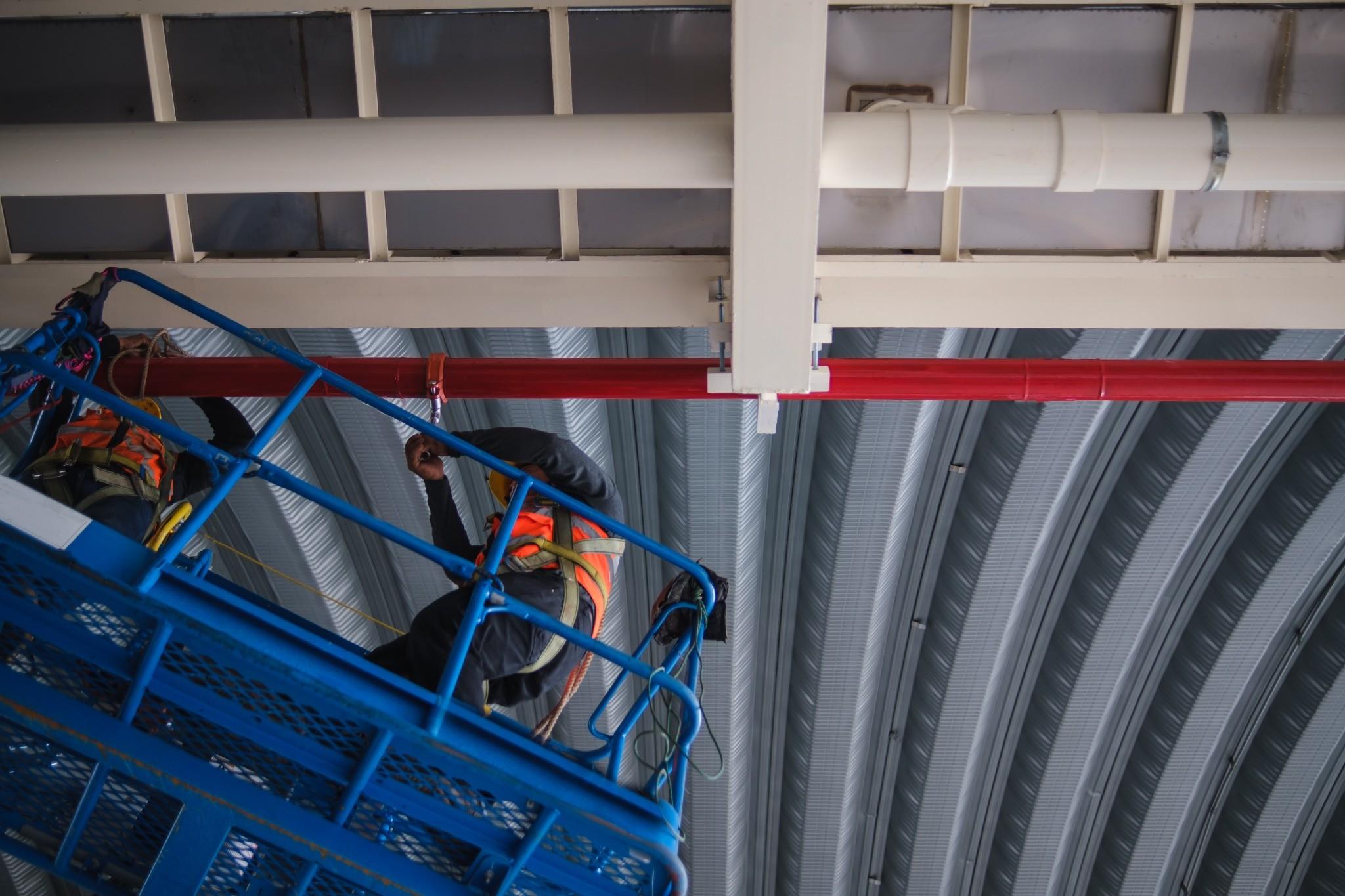
• Installing overhead sprinkler piping
• Mounting sprinkler heads
• Installing valves
• Connecting alarm devices
• Installing seismic bracing where required
• Connecting fire department connections
• Installing fire pumps (when required)
Experienced sprinkler fitters work closely with other trades to maintain project schedules while ensuring code-compliant installation.
Choosing the Right Fire Sprinkler System
Several different sprinkler system types are available depending on the building and occupancy.
Wet Pipe Fire Sprinkler Systems
The most common system for commercial buildings where freezing temperatures are not a concern.
Dry Pipe Fire Sprinkler Systems
Ideal for unheated areas such as loading docks, parking garages, and cold environments.
Pre-Action Fire Sprinkler Systems
Designed for facilities where accidental water discharge could damage valuable equipment.
Deluge Fire Sprinkler Systems
Used in high-hazard industrial occupancies where rapid fire spread is possible.
ESFR Fire Sprinkler Systems
Engineered specifically for warehouses with high-piled storage.
In-Rack Fire Sprinkler Systems
Installed directly within storage racks for enhanced commodity protection.
Quell Fire Sprinkler Systems
Designed to protect challenging warehouse storage applications and cold storage facilities.
Selecting the appropriate system is one of the most important decisions made during the design process.
Hydraulic Calculations Ensure Proper Performance
One of the most critical design steps is performing hydraulic calculations.
These calculations verify that sufficient water pressure and flow are available to operate the sprinkler system as designed.
Hydraulic calculations evaluate:
• Water supply
• Pipe sizing
• Friction loss
• Elevation changes
• Sprinkler demand
• Fire pump requirements
Proper calculations help ensure the system performs effectively during a fire emergency.
Inspection During Installation
Quality control begins long before the project is complete.
Throughout installation, technicians inspect workmanship to verify:
• Proper pipe installation
• Correct sprinkler spacing
• Secure hangers and supports
• Valve installation
• Equipment accessibility
• Proper labeling
Identifying issues during construction helps reduce corrections later in the project.
Acceptance Testing
Once installation is complete, the system undergoes comprehensive acceptance testing.
Testing typically includes:
• Hydrostatic testing
• Main drain testing
• Alarm testing
• Waterflow testing
• Fire pump testing (when applicable)
• Valve inspections
• System flushing
• Final operational testing
These tests verify the sprinkler system performs according to design before the building is occupied.
Training and Documentation
Before the project is complete, building owners and facility managers should receive documentation and operational guidance.
Typical closeout documentation includes:
• As-built drawings
• Hydraulic calculations
• Product data
• Inspection reports
• Operation manuals
• Maintenance recommendations
Understanding how the system operates helps building personnel maintain reliable long-term performance.
Installation Is Only the Beginning
After installation, sprinkler systems require routine inspection, testing, and maintenance throughout their service life.
NFPA 25 establishes the inspection requirements for water-based fire protection systems.
Routine maintenance may include:
• Monthly inspections
• Quarterly inspections
• Annual inspections
• Main drain testing
• Waterflow testing
• Five-year obstruction investigations
• Internal pipe inspections
• Valve inspections
Preventive maintenance helps ensure the system remains compliant while reducing unexpected repairs.
Common Installation Challenges
Every construction project presents unique challenges.
Common issues include:
• Limited ceiling space
• Utility conflicts
• Existing building renovations
• Water supply limitations
• Schedule coordination
• Occupancy changes
• Tenant improvements
Working with an experienced fire protection contractor helps identify and resolve these challenges before they impact the project schedule.
Partner with an Experienced Fire Protection Team
Commercial fire sprinkler installation is much more than installing pipe and sprinkler heads. It requires engineering expertise, code knowledge, careful coordination, and experienced technicians who understand how to design systems that perform reliably for decades.
Whether you’re planning new construction, renovating an existing building, expanding warehouse storage, or upgrading aging fire protection equipment, we provide complete engineering, design, installation, inspections, testing, maintenance, and emergency service for commercial fire sprinkler systems. Our experienced team works closely with owners, architects, engineers, contractors, and facility managers to deliver code-compliant fire protection solutions that help safeguard people, property, and business operations.