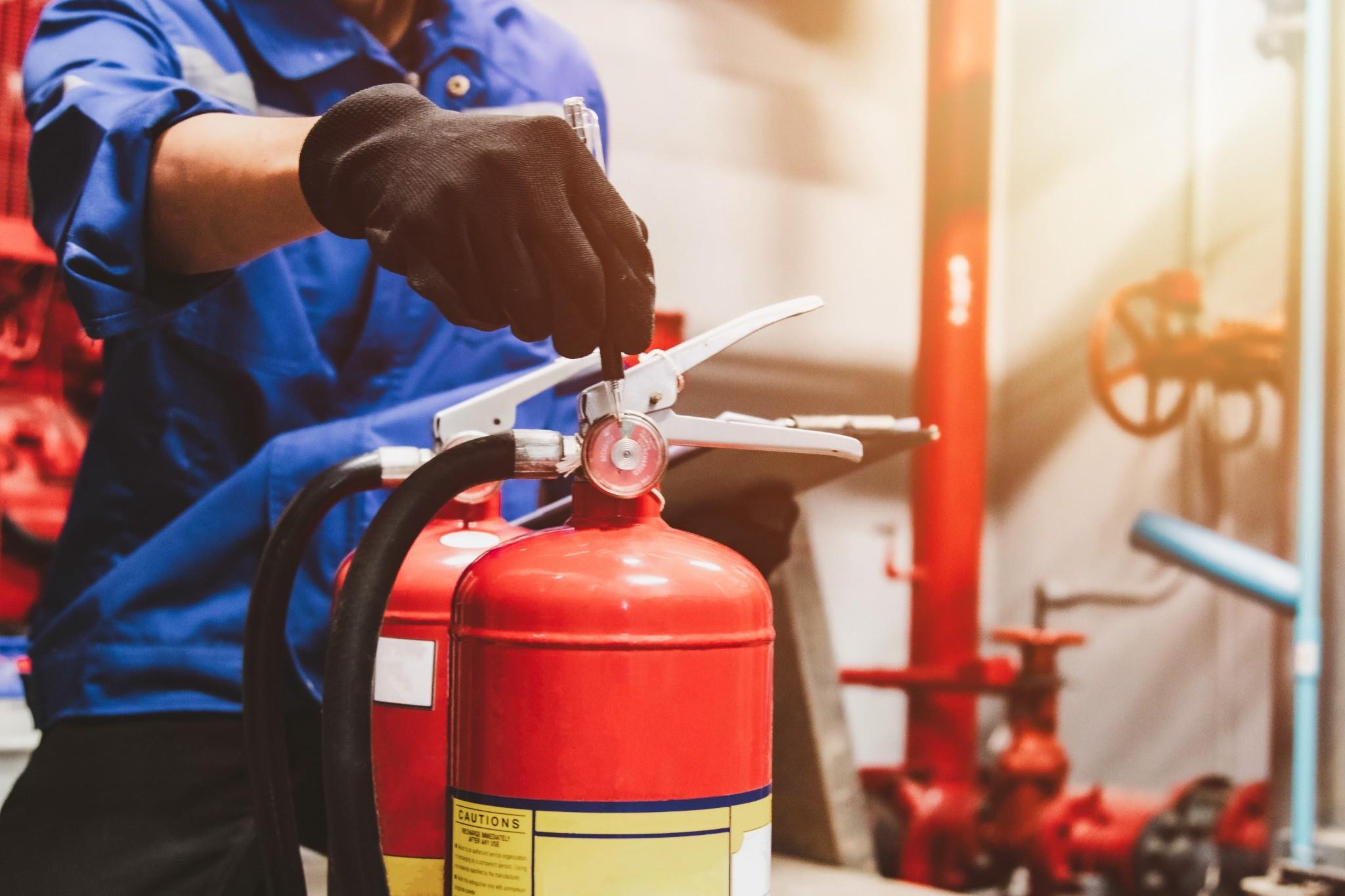
Portable fire extinguishers are one of the most recognizable pieces of fire protection equipment found in commercial buildings. They are often the first line of defense against a small fire, allowing trained occupants to quickly control or extinguish a fire before it grows into a life-threatening emergency. However, simply having fire extinguishers installed throughout your facility is not enough. Without routine inspections, maintenance, testing, and proper documentation, they may not function when they’re needed most.
Professional fire extinguisher servicing helps businesses remain compliant with fire codes, protects occupants, supports insurance requirements, and ensures extinguishers are ready to perform during an emergency. Whether you manage an office building, warehouse, manufacturing plant, healthcare facility, school, restaurant, or retail location, maintaining your fire extinguishers is an essential part of your overall fire protection strategy.
Why Fire Extinguisher Maintenance Matters
Fire extinguishers are mechanical devices that can lose pressure, become damaged, corrode, or develop blocked discharge paths over time. Even though they are rarely used, they require ongoing inspections and maintenance to verify they remain fully operational.
Routine servicing helps ensure:
• Extinguishers are properly charged.
• Safety seals and tamper indicators remain intact.
• Units are accessible and correctly mounted.
• Labels and operating instructions remain legible.
• Physical damage or corrosion is identified.
• Required testing and maintenance are completed on schedule.
Proper maintenance gives facility managers confidence that extinguishers will perform as designed when seconds matter most.
Understanding NFPA 10 Requirements
The National Fire Protection Association (NFPA) publishes NFPA 10, the Standard for Portable Fire Extinguishers, which establishes the requirements for the selection, installation, inspection, maintenance, testing, and replacement of portable fire extinguishers.
NFPA 10 outlines requirements for:
• Extinguisher selection
• Proper installation and mounting
• Inspection frequency
• Annual maintenance
• Internal examinations
• Hydrostatic testing
• Recordkeeping
• Employee training
Meeting these requirements helps facilities remain compliant with local fire codes and Authority Having Jurisdiction (AHJ) regulations.
Monthly Inspections vs. Annual Maintenance
One of the most common misconceptions is that monthly inspections and annual maintenance are the same thing. They serve different purposes.
Monthly Visual Inspections
Monthly inspections are designed to verify that extinguishers remain in service and have not been damaged or tampered with.
During a monthly inspection, personnel should verify:
• The extinguisher is in its designated location.
• Access to the extinguisher is not obstructed.
• Pressure gauges indicate normal operating range.
• Safety pins and tamper seals remain intact.
• No visible damage or corrosion is present.
• Inspection records are updated.
Annual Maintenance
Annual maintenance is more comprehensive and should be performed by qualified fire protection professionals. This service includes a detailed examination of the extinguisher’s mechanical components, operating condition, and compliance with NFPA 10 requirements.
Additional maintenance may include replacing damaged parts, verifying proper pressure, updating service records, and identifying extinguishers nearing the end of their service life.
Hydrostatic Testing
Certain types of portable fire extinguishers require periodic hydrostatic testing to verify the structural integrity of the pressure cylinder.
Hydrostatic testing helps identify:
• Internal corrosion
• Metal fatigue
• Physical damage
• Pressure vessel deterioration
Testing intervals vary depending on the extinguisher type and agent used. Following the manufacturer’s recommendations and NFPA 10 requirements helps ensure continued safe operation.
Choosing the Correct Fire Extinguisher
Not every fire extinguisher is designed for every type of fire. Selecting the proper extinguisher for your facility is critical.
Common extinguisher classifications include:
Class A
Designed for ordinary combustible materials such as wood, paper, cloth, and many plastics.
Class B
Designed for flammable liquids including gasoline, oil, paint, and solvents.
Class C
Designed for energized electrical equipment.
Class D
Designed for combustible metal fires commonly found in specialized industrial environments.
Class K
Designed specifically for commercial cooking operations involving vegetable oils and animal fats.
Many commercial facilities require multiple extinguisher types depending on the hazards present throughout the building.
Common Compliance Issues
During inspections, fire protection professionals frequently identify deficiencies that place facilities at risk of code violations or reduced protection.
Common issues include:
• Missing fire extinguishers
• Blocked or inaccessible extinguishers
• Low pressure
• Expired maintenance
• Damaged hoses or nozzles
• Corrosion
• Missing inspection tags
• Improper mounting heights
• Incorrect extinguisher type for the hazard
Correcting these issues promptly helps improve safety while avoiding costly compliance problems.
Employee Training Is Equally Important
Even properly maintained fire extinguishers are only effective if employees understand when and how to use them safely.
Facilities should provide training covering:
• Fire extinguisher locations
• Fire classifications
• Extinguisher operation
• When to attempt extinguishment
• When to evacuate immediately
Many organizations use the PASS method:
• Pull the safety pin.
• Aim at the base of the fire.
• Squeeze the handle.
• Sweep from side to side.
Employees should only use extinguishers on small, manageable fires when it is safe to do so and they have a clear evacuation path.
Fire Extinguishers Are One Part of a Complete Fire Protection System
Portable fire extinguishers provide important protection, but they are most effective when integrated into a complete fire protection program.
A comprehensive strategy may include:
• Fire sprinkler systems
• Fire alarm systems
• Fire alarm monitoring
• Fire pumps
• Kitchen hood suppression systems
• Special hazard suppression systems
• Backflow preventers
• Emergency and exit lighting
• Security and access control systems
Together, these systems provide multiple layers of protection that improve life safety, minimize property damage, and support business continuity.
The Benefits of Professional Fire Extinguisher Service
Working with experienced fire protection professionals provides several advantages beyond code compliance.
Professional servicing helps:
• Improve occupant safety
• Maintain NFPA compliance
• Reduce the likelihood of equipment failure
• Simplify inspections and documentation
• Support insurance requirements
• Identify deficiencies before they become costly problems
• Extend equipment service life
Routine maintenance also allows facilities to identify opportunities to improve their overall fire protection strategy.
Protect Your Facility with Reliable Fire Extinguisher Service
Portable fire extinguishers play an important role in protecting commercial buildings, but they must be properly inspected, maintained, and tested to provide reliable performance. A proactive maintenance program helps ensure your equipment is ready when it’s needed while keeping your facility compliant with applicable fire codes and industry standards.
Whether you manage a single building or multiple facilities, we provide professional fire extinguisher inspections, maintenance, testing, replacements, and compliance services to help protect your people, property, and operations. Contact us today to learn how our fire protection experts can help keep your facility safe and code compliant.