A fire protection system is one of the most valuable investments a commercial property owner can make. Beyond meeting code requirements, today’s fire protection systems help save lives, reduce property damage, minimize business interruption, lower insurance risk, and protect the long-term value of your facility.
However, many business owners don’t fully understand what a complete fire protection system includes. Fire protection is much more than sprinklers or fire alarms—it’s a coordinated network of systems that detect fires, notify occupants, suppress flames, support emergency responders, and help businesses recover faster after an emergency.
Whether you’re constructing a new building, renovating an existing facility, or evaluating your current life safety systems, this guide explains the different types of commercial fire protection systems, how they work together, and why every business should invest in a comprehensive fire protection strategy.
Why Fire Protection Matters
Commercial fires can happen in any industry.
Common causes include:
• Electrical failures
• Cooking equipment
• Mechanical equipment
• Flammable liquids
• Heating equipment
• Human error
• Manufacturing processes
• Arson
Even a relatively small fire can lead to:
• Significant property damage
• Lost revenue
• Employee injuries
• Business interruption
• Insurance claims
• Customer disruption
• Regulatory investigations
A properly designed fire protection system dramatically reduces these risks.
What Does a Fire Protection System Actually Do?
Many people think a fire protection system simply puts out fires.
In reality, commercial fire protection systems perform several critical functions.
They help:
• Detect fires early
• Alert occupants
• Notify emergency responders
• Suppress or control fires
• Protect critical assets
• Slow fire spread
• Improve evacuation
• Reduce smoke damage
• Support firefighter operations
• Maintain business continuity
Each component plays a different role within a complete life safety strategy.
The Three Primary Types of Commercial Fire Protection Systems
Although commercial facilities often contain numerous specialized systems, most fire protection falls into three major categories.
1. Fire Detection Systems
Fire detection systems identify developing fire conditions before they become large emergencies.
These systems include:
• Fire alarm systems
• Smoke detectors
• Heat detectors
• Manual pull stations
• Voice evacuation systems
• Fire alarm monitoring
Early detection provides valuable time for occupants to evacuate safely and allows emergency responders to react quickly.
2. Fire Suppression Systems
Fire suppression systems actively control or extinguish fires.
Common suppression systems include:
• Wet pipe sprinkler systems
• Dry pipe sprinkler systems
• Pre-action sprinkler systems
• Deluge sprinkler systems
• ESFR systems
• In-rack sprinkler systems
• Clean agent suppression
• CO₂ systems
• Foam systems
• Water mist systems
• Kitchen hood suppression systems
Each system is designed to protect specific occupancy types and fire hazards.
3. Portable Fire Protection Equipment
Portable fire protection equipment allows occupants to respond to small fires before they spread.
Examples include:
• Fire extinguishers
• Fire hoses
• Fire blankets (special applications)
Portable equipment serves as an important first line of defense during incipient-stage fires.
Choosing the Right Fire Alarm System
Fire alarm systems vary considerably based on the size and complexity of a building.
Conventional Fire Alarm Systems
Best suited for:
• Small office buildings
• Small retail facilities
• Stand-alone commercial buildings
Advantages:
• Lower installation cost
• Simple operation
• Reliable performance
Addressable Fire Alarm Systems
Recommended for:
• Healthcare facilities
• Hotels
• Warehouses
• Manufacturing plants
• Office buildings
• Schools
Advantages:
• Exact device identification
• Easier troubleshooting
• Greater flexibility
• Better scalability
• Faster emergency response
Selecting the proper fire alarm system depends on occupancy, building size, future expansion, and applicable codes.
Commercial Fire Sprinkler Systems
Fire sprinkler systems remain one of the most effective methods of limiting fire damage.
Common system types include:
Wet Pipe Systems
Ideal for climate-controlled commercial buildings.
Dry Pipe Systems
Designed for facilities exposed to freezing temperatures.
Pre-Action Systems
Used in data centers, museums, archives, and mission-critical environments where accidental water discharge must be minimized.
Deluge Systems
Designed for high-hazard industrial occupancies with rapidly developing fires.
ESFR Systems
Protect warehouses with high-piled storage.
In-Rack Systems
Installed directly inside warehouse storage racks for enhanced protection.
Selecting the proper sprinkler system depends on occupancy, environmental conditions, storage arrangements, and fire hazards.
Additional Fire Protection Systems
Many commercial facilities require specialized protection beyond traditional sprinklers and alarms.
Examples include:
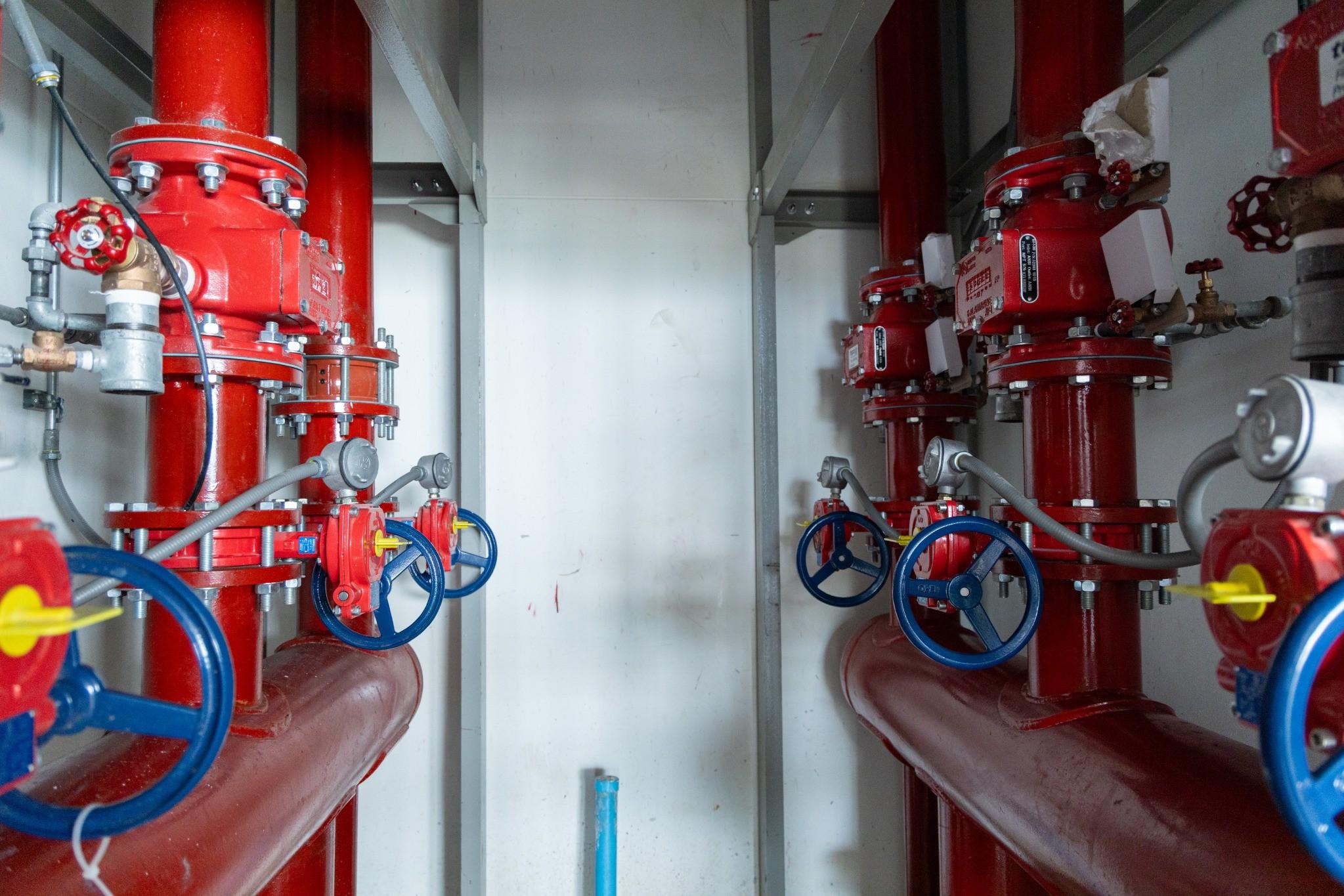
Fire Pumps
Provide the water pressure necessary for sprinkler systems in larger buildings.
Kitchen Hood Fire Suppression
Protect commercial cooking equipment from grease fires.
Clean Agent Systems
Protect sensitive electronics without causing water damage.
Backflow Preventers
Protect municipal water supplies from contamination.
Emergency Lighting
Provide illumination during power failures.
Exit Signs
Guide occupants to safety during evacuations.
Fire Alarm Monitoring
Provides 24/7 emergency notification to monitoring centers and fire departments.
Together, these systems create multiple layers of protection throughout a facility.
The Business Benefits of Investing in Fire Protection
A comprehensive fire protection strategy offers benefits far beyond code compliance.
Improved Life Safety
Protect employees, customers, visitors, and tenants.
Reduced Property Damage
Early detection and suppression significantly reduce fire losses.
Lower Business Interruption
Smaller fires typically result in faster recovery and less operational downtime.
Insurance Benefits
Well-maintained fire protection systems may improve insurability and reduce long-term risk.
Regulatory Compliance
Proper systems help satisfy local fire codes, insurance requirements, and NFPA standards.
Asset Protection
Protect equipment, inventory, data, machinery, and critical infrastructure.
Long-Term Cost Savings
Preventive maintenance and early fire suppression often cost far less than rebuilding after a fire.
Industries That Benefit from Comprehensive Fire Protection
Every commercial occupancy has unique fire protection needs.
Examples include:
• Office Buildings
• Warehouses
• Manufacturing Facilities
• Healthcare Facilities
• Hotels
• Educational Facilities
• Retail Centers
• Property Management
• Data Centers
• Government Buildings
• Industrial Facilities
Customized system design ensures every building receives protection appropriate for its operations.
Routine Inspections Protect Your Investment
Installing a fire protection system is only the beginning.
Routine inspections help verify:
• Fire alarms operate properly.
• Sprinkler systems remain functional.
• Fire pumps are ready.
• Fire extinguishers remain serviceable.
• Monitoring systems communicate correctly.
• Suppression systems remain code compliant.
Preventive maintenance helps identify deficiencies before they affect system performance.
Applicable NFPA Standards
Commercial fire protection systems are commonly governed by:
• NFPA 13 – Installation of Sprinkler Systems
• NFPA 25 – Inspection, Testing, and Maintenance of Water-Based Fire Protection Systems
• NFPA 72 – National Fire Alarm and Signaling Code
• NFPA 10 – Portable Fire Extinguishers
• NFPA 20 – Installation of Fire Pumps
• NFPA 96 – Commercial Kitchen Ventilation and Fire Protection
• NFPA 101 – Life Safety Code
Additional state and local requirements may also apply.
Why Work with a Full-Service Fire Protection Provider?
Managing multiple contractors for alarms, sprinklers, extinguishers, suppression systems, and inspections often creates unnecessary complexity.
A full-service provider offers:
• One point of contact
• Coordinated inspections
• Comprehensive documentation
• Faster emergency response
• Consistent maintenance
• Simplified compliance
• Long-term planning
• Complete life safety expertise
Working with one experienced partner helps ensure every system functions together as part of a complete fire protection strategy.
Protect Your Business with a Complete Fire Protection Solution
Fire protection is not a single product—it’s a comprehensive strategy designed to protect lives, property, and business operations. By combining fire alarms, sprinkler systems, suppression systems, fire extinguishers, monitoring, inspections, and preventive maintenance, businesses create multiple layers of protection that reduce risk and improve resilience.
Whether you’re designing a new commercial building, upgrading aging systems, expanding your facility, or planning a long-term maintenance program, we provide complete fire protection engineering, design, installation, inspections, testing, monitoring, maintenance, repairs, and emergency service. Our experienced team works with businesses across virtually every industry to deliver customized fire protection solutions that keep facilities safe, compliant, and prepared for the future.